6 minute read -
Budget Cordless Drill: How to Choose a Good One for Less
A good budget cordless drill for home use runs on 18V, has an adjustable clutch, two speeds and a lithium-ion battery on a platform you can add other tools to later. With that you can drill into wood and metal, into brick if it has a hammer function, and drive screws neatly.
What will you learn in this article?
- What makes a cordless drill a good budget choice?
- How many volts do you need?
- Torque, clutch and speeds
- With or without a hammer function?
- Which battery and charger?
- Bare tool or complete kit?
- Where does the Batavia Twin Drill fit in?
- Where do cheaper drills save money?
- When is a more expensive drill worth it?
- How do you make your cordless drill last longer?
- Safety
- Frequently asked questions about budget cordless drills
- In short: choosing a budget cordless drill
What makes a cordless drill a good budget choice?
A budget drill is a good buy if it reliably handles the jobs you actually do, without you paying for power you will never use. For most DIYers that means assembling furniture, hanging shelves and lights, drilling holes in wood and metal and now and then putting a wall plug into a wall. You do not need a professional tool for that. Focus on five points: voltage, torque and clutch, speeds, battery and the option to expand.
How many volts do you need?
- 12V: light and compact, fine for assembling furniture and light screwdriving. Not enough for large holes or masonry.
- 18V: the standard for home use. Enough power for drilling wood and metal, driving longer screws and, with a hammer function, drilling brick.
If in doubt, go for 18V. The price difference is often small and you will run into limits less quickly.
Torque, clutch and speeds
Torque is the turning force of the drill, measured in newton metres (Nm). The higher it is, the easier it is to drive long screws into hardwood. The clutch is the numbered ring behind the chuck. It lets you set the point at which the drill stops turning the screw, so you do not sink it too deep or strip the head. Choose a drill with enough clutch settings to fine-tune this.
Two speeds are useful. The low gear gives plenty of force at low speed, for driving screws. The high gear spins faster and is better for drilling into wood and metal.
With or without a hammer function?
A hammer function makes the chuck vibrate so you can drill holes in brick and lightweight block. If you want to put up a shelf bracket or curtain rail on a brick wall, a hammer drill, often sold as a combi drill, is the most practical budget choice. For lots of holes in concrete a hammer drill falls short and you need a rotary hammer. Our article on the differences between a rotary hammer and a hammer drill explains when each one makes sense.
Which battery and charger?
Almost all modern tools run on lithium-ion. These batteries lose little charge when stored and have no memory effect. Pay attention to two things:
- Capacity in Ah: more amp hours means longer working time, but also a little more weight.
- Number of batteries: with two batteries you can charge one while using the other. With a budget kit one battery is sometimes enough for short jobs, but a second battery is a worthwhile investment.
Look at the charger as well. A fast charger is convenient, but a standard charger is rarely a problem for home use.
Bare tool or complete kit?
If you already have batteries from the same platform, you save money by buying a bare tool without a battery and charger. If you are just starting out, a kit with a battery, charger and case is cheaper than buying everything separately. The advantage of a battery platform such as Batavia Maxxpack 18V is that you can later add a sander, saw or lawn mower that runs on the same battery.
Where does the Batavia Twin Drill fit in?
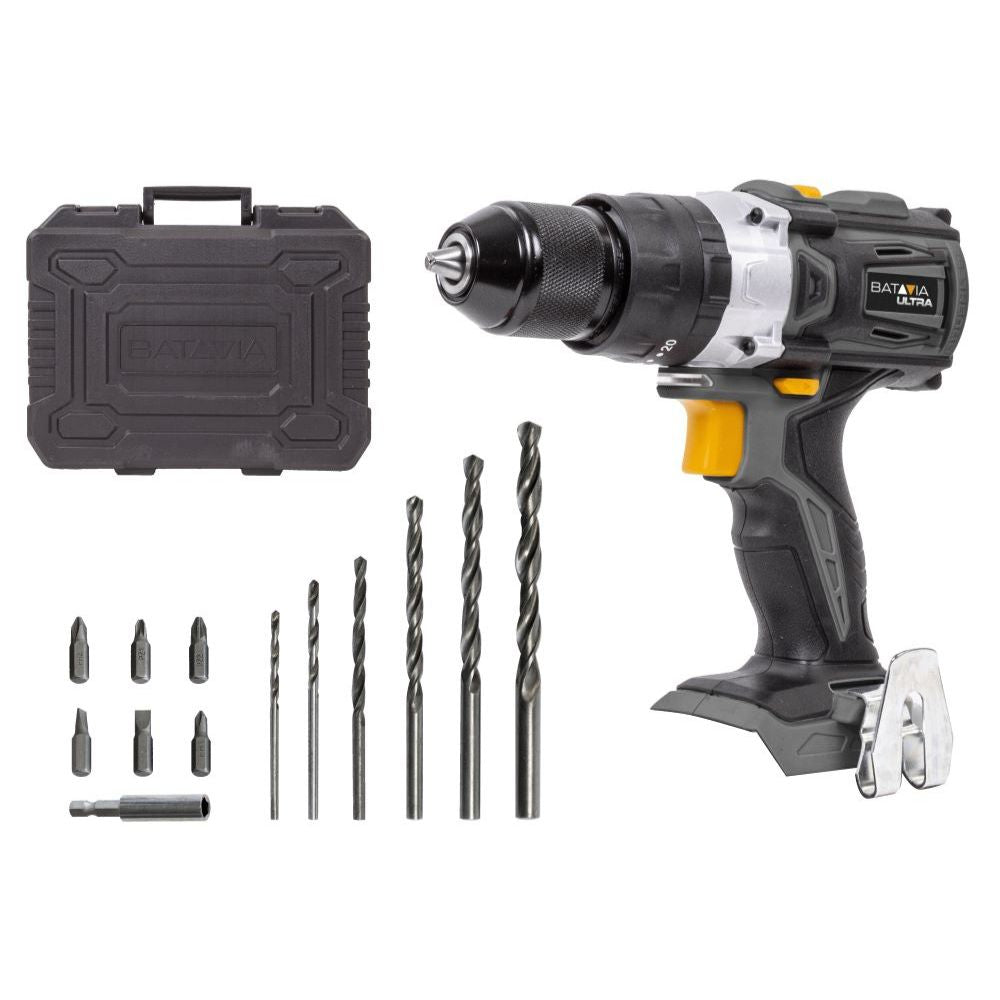
The Batavia Twin Drill 18V is a cordless drill driver aimed at home DIY. Check its specifications on the product page, such as torque, speed and battery capacity, and compare them with the jobs you have in mind before you buy.
Where do cheaper drills save money?
On cheaper drills you will often find:
- a brushed motor instead of a brushless one
- a plastic chuck instead of a metal one
- less torque and a lower top speed
- a lower-capacity battery or a slower charger
For home use these are rarely a problem. A brushed motor will last for years with normal use.
When is a more expensive drill worth it?
A more expensive drill pays off if you use it every day, drill a lot into concrete or hardwood, or drive long timber screws, for example when building a patio cover. Then you will notice the difference in power, heat build-up and lifespan. For heavy concrete work, you are better off buying a separate rotary hammer than a more expensive drill.
How do you make your cordless drill last longer?
- Use sharp bits and the right type of bit for the material.
- Let the drill do the work and do not push too hard.
- Store batteries indoors, dry and out of freezing temperatures.
- Charge a battery before putting it away for a long time.
- Clear dust from the ventilation slots now and then.
Safety
Wear safety glasses when drilling, especially into metal and masonry. When drilling metal, clamp the workpiece in a vice or with clamps. Use a detector to check for cables and pipes before drilling into a wall. Remove the battery from the drill when changing bits.
Frequently asked questions about budget cordless drills
Is a cheap cordless drill good enough?
For ordinary jobs around the house, yes, as long as it has 18V, a clutch and two speeds. If you drill into concrete a lot or use it every day, choose a heavier model or a separate rotary hammer.
What is the difference between a drill and a driver?
A cordless drill driver does both. An impact driver is mainly for screws and drives long screws home with short, rapid blows. For most DIYers a combined drill driver is the most useful first tool.
Can I drill into masonry with a budget cordless drill?
With a hammer function, you can drill into brick and lightweight block. For concrete you need a rotary hammer. Always use a masonry bit with a carbide tip.
Should I buy a drill with two batteries?
For short jobs, one battery is enough. If you will be drilling and driving screws for longer stretches, a second battery saves you waiting for the first one to charge.
In short: choosing a budget cordless drill
A budget cordless drill does everything most DIYers need if it has 18V, an adjustable clutch, two speeds and a battery platform you can build on. Add a hammer function if you drill into brick, and a second battery if you work for longer. For regular concrete work, buy a separate rotary hammer.