6 minute read -
Sanding Plaster: What to Look For in a Drywall Sander
For plaster on walls and ceilings, a drywall sander is the best choice: a round sanding head on a long pole, with variable speed and a connection for dust extraction. When choosing one, look mainly at the weight, the length of the pole and if the speed is adjustable.
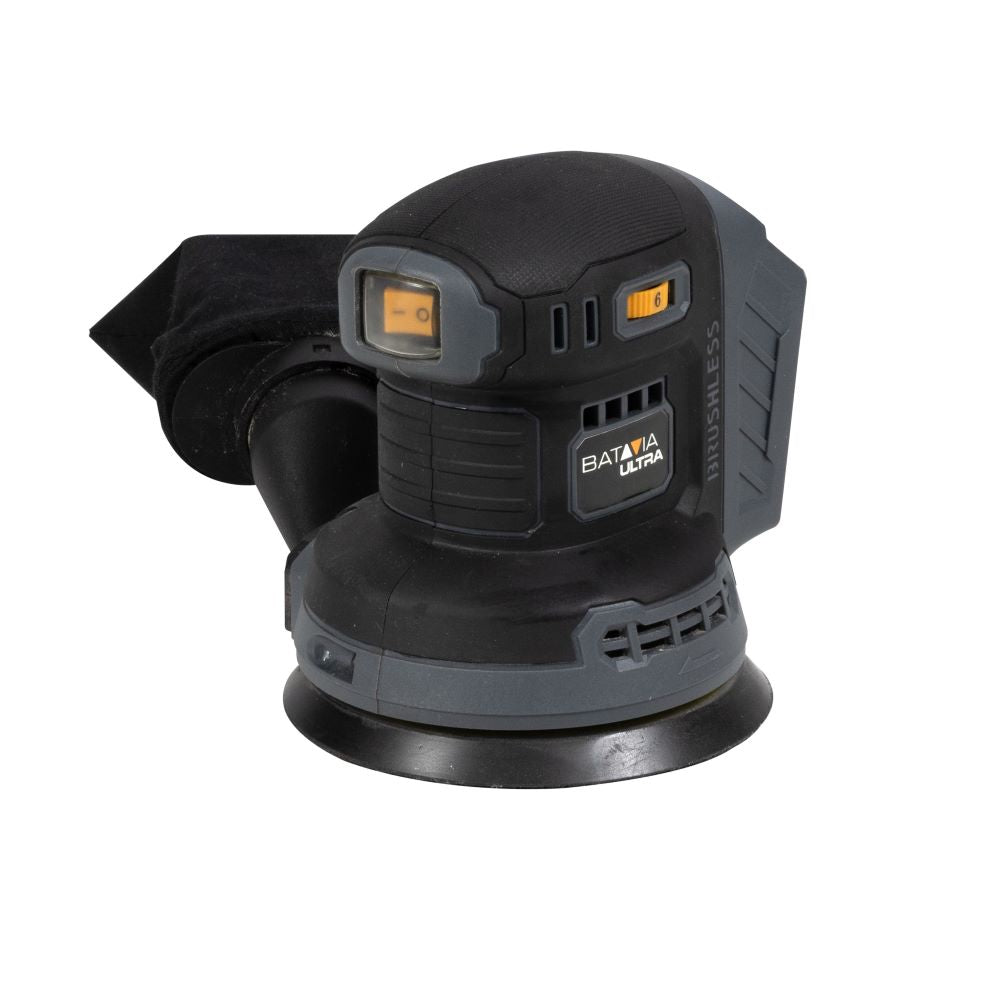
Small repairs can be sanded just as well with a random orbit sander or by hand.
What will you learn in this article?
- What is a drywall sander?
- What types of drywall sander are there?
- What should you look for when choosing a drywall sander?
- Which grit should you use on plaster?
- Step by step: sanding plaster with a drywall sander
- Sanding a ceiling without a ladder: making it easier
- Can you sand textured plaster?
- Frequently asked questions about drywall sanders
- In short: choosing a drywall sander for plaster
What is a drywall sander?
A drywall sander, also known as a giraffe sander, has a rotating sanding disc, usually around 215 to 225 mm, at the end of a long pole. The head pivots, so it stays flat against the wall or ceiling while you hold the pole at an angle. That lets you sand large areas without constantly moving a stepladder.
Because plaster and gypsum produce very fine dust, there is almost always an extraction port on the head. The disc is often surrounded by a brush skirt that keeps the dust inside the hood.
What types of drywall sander are there?
| Type | Feature | Suitable for |
|---|---|---|
| Compact drywall sander | Short pole, light | Walls up to about shoulder height, smaller rooms |
| Drywall sander with fixed long pole | Reaches the ceiling | Standard rooms, whole walls |
| Telescopic drywall sander | Extending pole | High ceilings, stairwells, varied work |
| Combination model | Head can be used as a hand-held sander | Large areas as well as edges and details |
For most rooms in a house, a model with a fixed long pole is enough. If you often work in high spaces, a telescopic pole is useful.
What should you look for when choosing a drywall sander?
Speed and speed control
A higher speed does not automatically mean a better result. On soft plaster or fresh filler, a high speed quickly removes too much. So choose a machine with variable speed. Start low and only turn it up if the material is hard or you are sanding off old paint.
Weight and balance
You hold a drywall sander up for a long time, especially on ceilings. A light machine is less tiring, but balance matters too. If the motor sits in the head, the machine feels heavier than a model with the motor near the handle.
Dust extraction
Without extraction, sanding plaster indoors is barely workable. Check whether the machine fits your vacuum cleaner or dust extractor and whether a hose is included. A dust extractor with an M-class filter captures fine dust better than an ordinary household vacuum.
Mains or cordless
A corded drywall sander delivers constant power for long jobs. A cordless model is handier where there is no socket nearby, but keep an eye on runtime: sanding with a large disc puts a heavy load on the battery. If you use a cordless model, a second battery is well worth having. Check the specifications of your sander to see which battery it takes and how long it runs on a charge.
Sanding discs and hook and loop
Most drywall sanders use round hook and loop sanding discs. Choose discs with holes that match the pattern in the sanding pad, so the extraction works properly. Mesh discs are also available, and they clog less quickly on gypsum and plaster.
Which grit should you use on plaster?
- P60 to P80: only for removing old paint or rough lumps. Take care, because this quickly sands through the plaster layer.
- P100 to P120: for filled joints and repairs.
- P150 to P180: for a final sand before painting.
Work from coarse to fine. On new, smooth plaster, start straight away with fine paper.
Step by step: sanding plaster with a drywall sander
Clear and protect the room
Empty the room, or cover furniture and the floor with plastic sheeting and a floor protector.
Make sockets safe
Switch off the circuit at the consumer unit if you are removing socket faceplates.
Clean the wall
Remove dust, dirt and loose bits of plaster or paint from the wall.
Fill and let it cure
Fill holes and cracks and let the filler cure completely.
Connect the extraction
Connect the extraction and set the speed to low.
Sand in overlapping passes
Bring the sander up to the wall while it is running and move it in steady, overlapping passes. Do not hold it still in one spot, or you will create dips. Start with the coarser grit, then move on to a finer one.
Finish the corners and edges
Sand corners and edges with a detail sander or a hand sanding block, because the round head cannot reach them.
Check with raking light
Hold a work light at a low angle along the wall to check that everything is flat, and repeat where needed.
Remove the dust
Clean the wall with a brush and the vacuum cleaner before you apply a mist coat or primer.
Sanding a ceiling without a ladder: making it easier
- Stand firmly with your feet slightly apart and keep the pole close to your body.
- Work in sections of about a square metre so you keep track of where you have been.
- Take regular breaks. Sanding above your head is hard on your shoulders and neck.
- Wear safety glasses as well as a dust mask, because the dust falls straight down.
Can you sand textured plaster?
Do not sand textured plaster or a decorative textured finish smooth, because the texture will disappear. At most, you can lightly sand off sharp protruding points with fine paper or a sanding sponge. If you want to paint textured plaster, clean it first with warm water and a cleaner suitable for the surface.
Frequently asked questions about drywall sanders
Do I need a drywall sander for one wall?
Not necessarily for one small wall. A random orbit sander with extraction works fine for that. If you are doing several rooms or ceilings, a drywall sander will save you a lot of time and effort.
Which mask should I wear when sanding plaster?
Use at least an FFP2 mask, and preferably FFP3 if there is a lot of dust. Plaster and gypsum dust is very fine. Always combine the mask with good extraction and safety glasses.
Why am I getting swirls or dips in the plaster?
Usually because the speed is too high, you are pressing too hard or you are holding the machine in one place for too long. Turn the speed down, keep the head flat and keep moving. Do not use sandpaper that is too coarse either.
Can I sand old plaster myself?
Ordinary gypsum or lime plaster can be sanded yourself. If you are unsure what is in the walls or on the ceilings of an older property, such as a sprayed textured coating or old layers of paint, have a sample tested for asbestos or lead before you sand.
In short: choosing a drywall sander for plaster
A drywall sander with variable speed, good balance and dust extraction makes sanding plaster on walls and ceilings much less hard work. Use P100 to P180, work at low speed in steady passes and finish the corners by hand or with a detail sander. For a single repair, a random orbit sander is enough.