7 minute read -
Drilling into Brick and Masonry: Which Cordless Drill Do You Need?
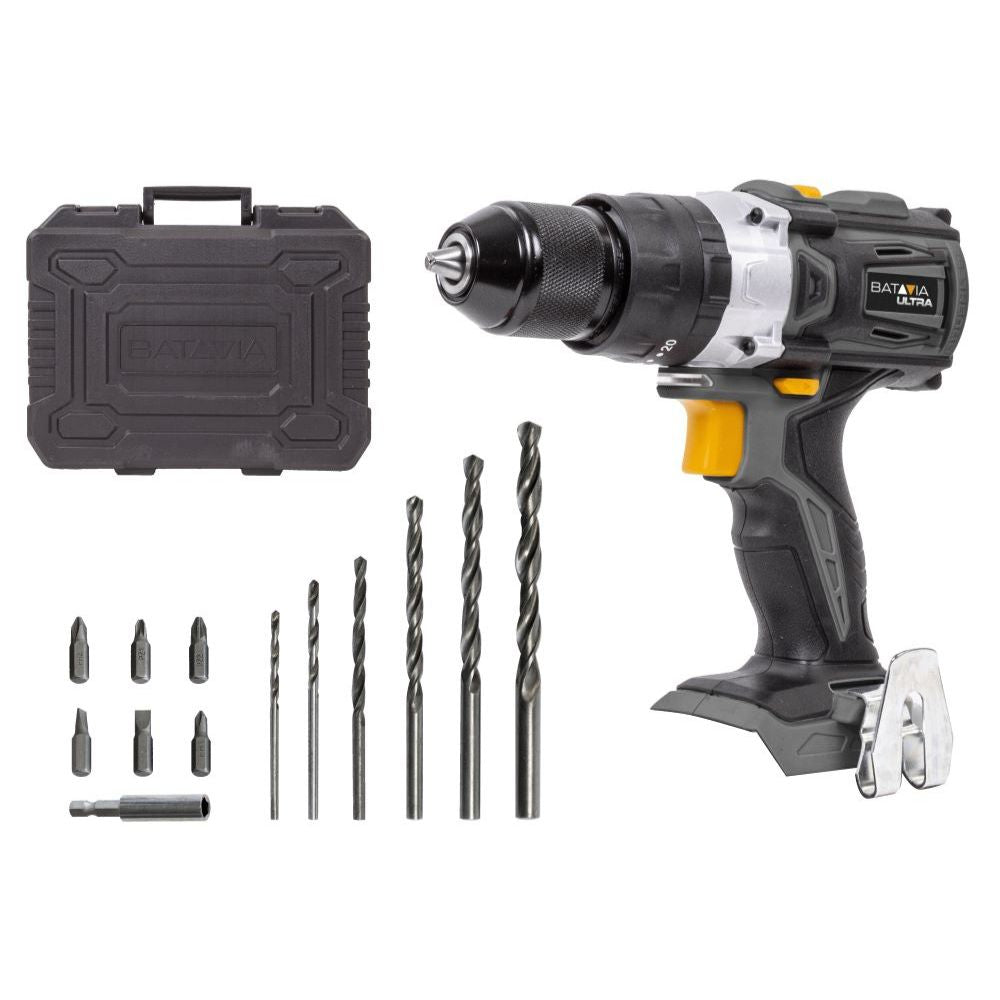
To drill into brick or stone you need a cordless drill with a hammer function, or for hard masonry and lots of holes, a cordless rotary hammer. An 18V cordless hammer drill is enough for brick and for wall plugs in most interior walls.
If you often drill into dense concrete blocks, natural stone or concrete, a rotary hammer with SDS-plus bits works faster and takes much less effort from you.
What will you learn in this article?
- Can you drill into brick with an ordinary cordless drill?
- Hammer drill or rotary hammer: which suits your job?
- What voltage do you need to drill into masonry?
- What to look for in a cordless drill for masonry
- Which drill bit should you use for masonry?
- How do you drill a hole in a masonry wall?
- How do you drill into tiles without cracking them?
- How to drill into masonry safely
- Frequently asked questions about drilling into masonry
- In short: drilling into masonry
Can you drill into brick with an ordinary cordless drill?
A standard drill driver has no hammer action. It will get through soft materials such as aircrete blocks or plaster, but in brick it is slow and the bit soon overheats and goes blunt. For masonry you need a tool that delivers blows as well as rotation. There are two types:
- Hammer drill (combi drill with hammer setting): the chuck vibrates rapidly back and forth. Suitable for brick, mortar joints and the occasional hole in harder material.
- Rotary hammer (SDS drill): a piston mechanism delivers powerful blows to the bit. Suitable for dense blocks, natural stone and concrete, and for many or larger holes.
Hammer drill or rotary hammer: which suits your job?
| Cordless hammer drill | Cordless rotary hammer | |
|---|---|---|
| Best for | Brick, mortar, aircrete, wood and screws | Dense blocks, concrete, natural stone |
| Impact | Light, vibrating | Powerful, measured in joules |
| Bits | Masonry bits with round shank | SDS-plus bits |
| Weight | Light, also good for driving screws | Heavier, mainly for drilling and chiselling |
| Hole size | Up to typical wall plug sizes | Larger holes too |
If you hang the odd shelf or light on a brick wall, a hammer drill is enough. If you are fitting a whole kitchen to dense blockwork or often drill into concrete, a rotary hammer saves a lot of time. Our article on rotary hammers vs hammer drills explains the differences in more detail.
What voltage do you need to drill into masonry?
Voltage gives an indication of the power a tool can deliver. The old advice of at least 14.4 volts is out of date: most cordless tools now run on 12 or 18 volts.
- 12 volts: light and handy for screwing and small holes. Fine for the occasional plug in brick, but it soon runs out of steam on hard masonry.
- 18 volts: the best choice for drilling into masonry. You get more power, and 18V tools are also available as rotary hammers.
For masonry, look at the hammer drills and rotary hammers in the Batavia Maxxpack 18V range. The lighter Fixxpack 12V platform suits smaller jobs better.
What to look for in a cordless drill for masonry
Impact rate or impact energy
On a hammer drill, look at the number of blows per minute. On a rotary hammer, the impact energy in joules matters more. The higher it is, the faster you get through hard masonry. Compare the figures in the specifications of the tools you are considering.
Speed and gears
Most cordless drills have two gears. Low gear gives plenty of torque for driving screws. High gear gives a higher speed, which is what you use for drilling. A variable-speed trigger lets you start slowly so the bit does not wander.
Torque
Torque (in newton metres, Nm) matters mostly for driving screws and for large bits in wood. When drilling masonry, the hammer action does most of the work. High torque is a bonus, but it is not the first thing to look at for masonry.
Battery and capacity
All modern cordless tools use lithium-ion batteries. They are lighter than the old NiCd and NiMH batteries and hold their charge well when stored. A battery with more amp hours (Ah) lasts longer per charge, and a 4Ah battery or larger is pleasant for drilling masonry. With a second battery you can keep working while the other charges.
Useful extras
An LED light near the chuck helps in dark corners and cupboards. An auxiliary side handle gives more control in hard masonry. A depth stop makes sure you do not drill deeper than you need to.
Which drill bit should you use for masonry?
- Brick and mortar: a masonry bit with a tungsten carbide tip.
- Dense blocks and concrete: an SDS-plus bit in a rotary hammer, or a good-quality masonry bit in a hammer drill.
- Aircrete blocks: an ordinary masonry bit with the hammer action switched off. With hammer action the hole becomes too large and the plug will not grip.
- Wall tiles: a tile bit or diamond bit, without hammer action.
Choose the bit diameter that matches your wall plug. The plug packaging tells you which bit size to use.
How do you drill a hole in a masonry wall?
- Check the wall for cables and pipes. Use a detector and avoid drilling directly above or below sockets and switches, as cables often run vertically or horizontally from them.
- Mark the hole with a pencil. On a tile, stick on a piece of masking tape first so the bit does not slip.
- Set the depth stop to the length of the plug plus a few millimetres.
- Start without hammer action at low speed until the bit has bitten into the material. Then switch on the hammer function.
- Keep the drill square to the wall and apply steady pressure. Pushing harder does not make it faster.
- Pull the bit back now and then to clear the dust.
- Clear the dust from the hole with a blower or vacuum before inserting the plug.
How do you drill into tiles without cracking them?
Always switch off the hammer action when drilling through a tile. Use a tile bit or diamond bit at low speed. Once you are through the tile, switch on the hammer function for the wall behind, if necessary with an ordinary masonry bit. Do not drill too close to the edge of a tile, which is where it cracks most easily.
How to drill into masonry safely
Drilling masonry produces fine dust that can contain silica. Wear a dust mask (at least FFP2, ideally FFP3), safety glasses and ear defenders. Vacuum up the dust as you go or use a dust extraction attachment. Hold a rotary hammer firmly with both hands: if the bit jams, the tool can twist sharply.
Frequently asked questions about drilling into masonry
Can I drill into concrete with a cordless drill?
A hammer drill can sometimes manage a single small hole in concrete, but it is slow and the bit wears quickly. For concrete, a rotary hammer with SDS-plus bits is the better choice. It is designed for the job.
Why won't my drill go through the wall?
You have often hit a piece of steel, a hard stone or reinforcement. The bit may also be blunt, or the hammer function may be switched off. If you hit metal, stop and move the hole a few centimetres, as it could also be a pipe or cable.
How can I tell what my wall is made of?
Look at the dust. Red or orange dust usually means brick, while grey dust points to concrete or dense concrete blocks. Very light, crumbly dust and easy drilling suggest aircrete. Harder materials drill noticeably better with a rotary hammer.
Which wall plug should I use in masonry?
In solid brick and dense blocks, a standard nylon plug works well. In aircrete or hollow blocks, choose a plug made for that material, such as an aircrete plug or a cavity fixing. The packaging tells you which material and bit size it is for.
In short: drilling into masonry
For brick and the occasional plug, choose an 18V hammer drill with a good masonry bit. For dense blocks, concrete and lots of holes, a rotary hammer with SDS-plus bits is the better choice. Look at impact rate or impact energy rather than torque, choose a lithium-ion battery with enough capacity and always start without hammer action on tiles.