7 minute read -
How to Fit Skirting Boards Straight and Secure
Fitting skirting boards comes down to four steps: measure up, cut to length with mitred corners, fix the boards to the wall, and finish with caulk and paint. On a smooth, dry wall, grab adhesive is the easiest fixing. On an uneven wall or with heavy boards, add screws or nails as well.
Always fix the skirting to the wall, never to a floating floor. The sections below explain how to plan the job, which fixing to choose and how to get a neat finish.
What will you learn in this article?
- Which tools do you need?
- How much skirting board do you need?
- How do you prepare the room?
- Where do you start fitting skirting?
- How do you cut skirting boards to size?
- Glue, screws or clips: which fixing should you choose?
- How do you fit skirting with laminate or a floating floor?
- How do you fit skirting against an uneven wall?
- How do you finish skirting at a door frame?
- Should you caulk between skirting and wall, or skirting and floor?
- Can you fit skirting with a cable channel?
- How do you finish off?
- Working safely
- Frequently asked questions about fitting skirting boards
- In short: fitting skirting boards
Which tools do you need?
- Tape measure, pencil and an angle finder or sliding bevel
- A mitre saw, or a fine handsaw with a mitre box
- A caulking gun with grab adhesive and decorators' caulk
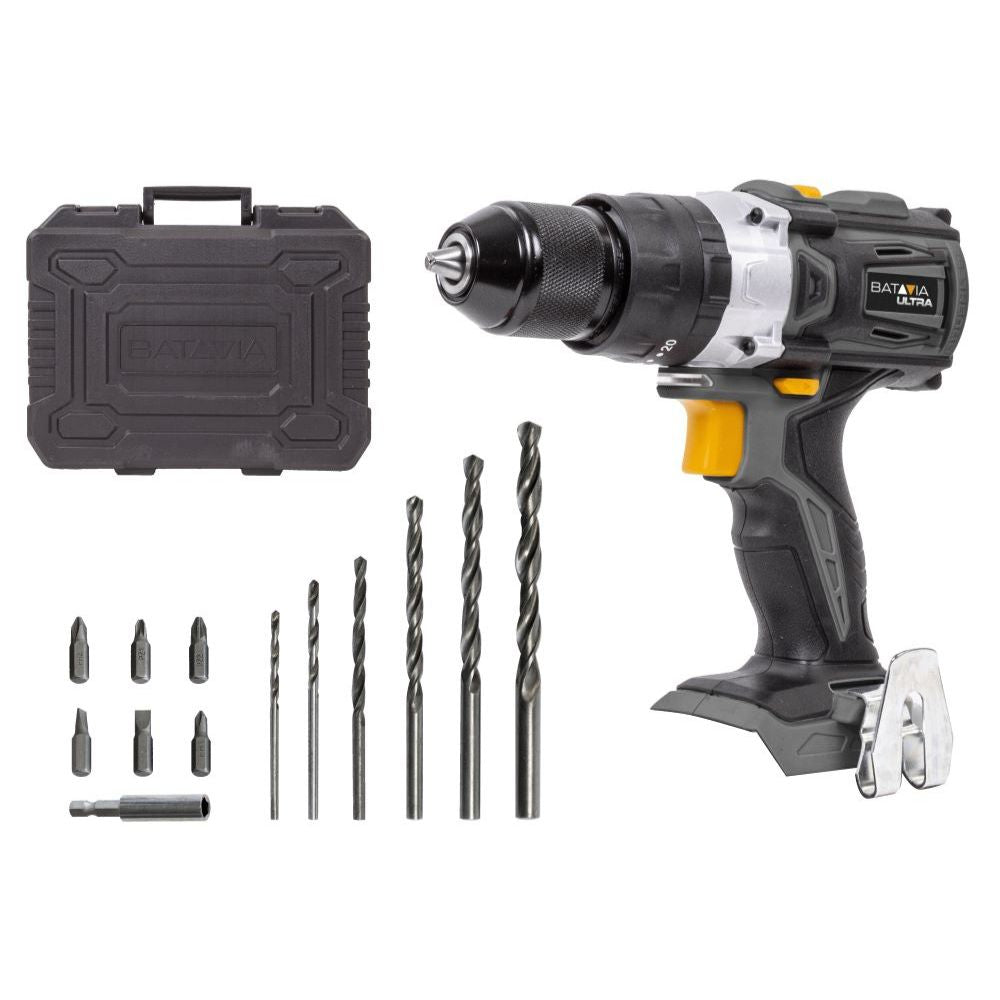
- A drill and drill driver with wall plugs and screws, or a hammer and thin nails
- A spirit level, filling knife and filler
- A cable and pipe detector if you will be drilling into the wall
A cordless mitre saw, such as the sliding mitre saw from the Maxxpack 18V range, makes cutting mitres a lot quicker and neater.
How much skirting board do you need?
Measure the perimeter of the room along the floor and subtract the width of the door openings. Add roughly 5 to 10 per cent for offcuts and corners. For a room with lots of corners, alcoves or short sections, allow more. Buy everything in one go so the colour and profile match.
How do you prepare the room?
Move the furniture out and clean the bottom of the wall so it is free of dust, because adhesive does not bond well to dust, flaking paint or damp. Scrape or sand away any lumps in the plaster. Leave the skirting boards in the room for a day so they can acclimatise.
Where do you start fitting skirting?
Start with the longest, most visible wall, usually the one opposite the door. That is where you want full-length boards with no joins. Work your way round the room from there. On long walls, place any joins where they are less noticeable, such as behind a cupboard. Lay all the pieces out loose first and check the corners before you glue anything.
How do you cut skirting boards to size?
Cut the corners as mitres, at 45 degrees per board for a right angle. If the wall is not square, measure the angle and divide it by two. On long walls, join boards with a scarf joint (two overlapping 45-degree cuts). Mitring, coping profiled corners and dealing with out-of-square walls are covered in more detail in our guide to cutting MDF skirting board.
Glue, screws or clips: which fixing should you choose?
| Method | Suitable for | Watch out for |
|---|---|---|
| Grab adhesive | Flat, dry walls, MDF and plastic skirting | The wall must be clean and sound |
| Adhesive plus thin nails | Slightly uneven walls; nails hold the board while the glue sets | Punch the nail heads below the surface and fill |
| Screws and wall plugs | Tall or heavy skirting, uneven or soft walls | Fill the screw holes and watch for pipes and cables |
| Skirting clips | Boards you want to be able to remove later | Clips must be straight and at the same height |
Which adhesive should you use for skirting boards?
Use a grab adhesive or construction adhesive that suits both the skirting material and the wall. Some types have high initial grab, which holds the board in place straight away. Apply the adhesive in a zigzag or in blobs on the back of the board, not too close to the edges, so it does not squeeze out. Drying times vary by product, and the cartridge tells you how long the board needs support.
How do you screw skirting boards to the wall?
First check with a cable and pipe detector where it is safe to drill. Cables often run vertically above and below sockets and switches, but they can also run horizontally just above the floor. Drill through the skirting and into the wall, fit a wall plug and screw the board in place with a countersunk screw. Always drill a pilot hole in MDF, otherwise the board can split.
How do you fit skirting with laminate or a floating floor?
A floating floor such as laminate or click vinyl must be able to expand and contract. That is why you leave an expansion gap along the wall, which the skirting covers. Fix the skirting only to the wall, never to the floor. Glue or screw the board so it rests on the floor but is not attached to it. Do not caulk the skirting to the floor either, otherwise the floor is still trapped.
How do you fit skirting against an uneven wall?
Where a wall dips inwards, you can pull the board tighter with a few screws. Where it bows outwards, sand or scrape the high spot back a little. Fill small gaps between skirting and wall with decorators' caulk. If the floor is not level, follow the floor with the skirting rather than a level line; otherwise you get a gap along the bottom that is far more noticeable.
How do you finish skirting at a door frame?
Run the skirting square up to the door frame or architrave and lightly sand the end grain. If the skirting is thicker than the architrave, you can cut the end at an angle or use an end piece that belongs to your skirting system.
Should you caulk between skirting and wall, or skirting and floor?
Between skirting and wall, use paintable decorators' caulk. It hides small gaps and gives a crisp line. Do not caulk between skirting and floor with a floating floor. With a fixed floor, such as tiles or a poured floor, you can, using a sealant that suits the floor. In wet rooms, use a sanitary silicone suitable for that location.
Can you fit skirting with a cable channel?
Yes. Some skirting boards have a routed channel at the back or a removable front for things like network cables. Fix them with clips or screws so you can still get at the cables later. Mains cables are subject to separate rules, so have any changes to the electrics made by a qualified electrician.
How do you finish off?
Let the adhesive dry. Fill nail and screw holes with filler, sand smooth and caulk the top edge. Paint the skirting once everything is dry, masking the floor with decorators' tape.
Working safely
Wear safety glasses when cutting and drilling, and a dust mask (at least FFP2) when cutting MDF. Use a cable and pipe detector before you drill. Unplug your tool or remove the battery before changing a blade or bit.
Frequently asked questions about fitting skirting boards
Can I fix skirting boards with adhesive only?
Yes, on a flat, clean and dry wall grab adhesive is enough. On uneven walls or with heavy boards, fix them with nails or screws as well.
How long should grab adhesive dry before I caulk?
That depends on the product and is shown on the cartridge. At the very least, wait until the board no longer moves before applying caulk or paint.
Can I glue skirting boards to laminate?
No. Laminate needs to be able to move. Fix the skirting only to the wall and let it rest loosely on the floor.
Why are my skirting boards coming away from the wall?
Often there was dust, flaking paint or damp on the wall, or the wall was too uneven for adhesive alone. Clean the wall, use an adhesive with high initial grab and fix the board with screws or nails as well.
In short: fitting skirting boards
Measure the room, start with the longest visible wall and mitre the corners. Glue the skirting to a flat wall, add screws or nails if the wall is uneven, and never fix it to a floating floor. Caulk the top edge and finish the holes with filler and paint.