7 minute read -
Loft or Wall Insulation: Where to Start and How to Go About It
In most homes you gain the most by insulating the roof or loft floor first, because heat rises and a poorly insulated roof lets a lot of it escape. Cavity walls come next, followed by the inside of solid external walls if needed. Loft insulation is a job you can do yourself with insulation boards or rolls, a vapour control layer and basic tools. Cavity wall insulation is usually blown in by a specialist installer.
What will you learn in this article?
- Why insulate?
- Loft or wall: where do you start?
- Which insulation material should you choose?
- How do you insulate a sloping loft roof?
- How do you insulate an internal wall?
- Which tools do you need?
- What about safety?
- How do you prevent damp and mould?
- Common mistakes
- Frequently asked questions about loft and wall insulation
- In short: loft or wall insulation
Why insulate?
A well-insulated house keeps the warmth in during winter and the heat out in summer. You use less heating, rooms feel less draughty and a cold loft can become usable as a bedroom or workspace. Insulation also deadens noise from outside, such as rain on the roof or passing traffic. How much you save depends on your house, its current insulation and how you heat it. An energy assessor can work this out for your home.
Loft or wall: where do you start?
| Loft or roof | Cavity wall | Inside of an external wall | |
|---|---|---|---|
| DIY job | Yes, with basic experience | Usually not, blown in by a specialist | Yes, with a stud wall lining |
| Space lost | A few centimetres under the roof | None | A few centimetres in the room |
| Disruption | Limited to the loft | One day, from outside | Room has to be cleared |
| Watch out for | Vapour control layer and ventilation | The cavity must be suitable | Cold bridges at junctions |
If you have a pitched roof and a loft you use as a room, insulate the roof slope between the rafters. If you only use the loft for storage, you can insulate the loft floor between the joists instead. The heat then stays in the floors below and you do not need to touch the roof.
Which insulation material should you choose?
- Glass wool or mineral wool: available as rolls or slabs, easy to wedge between rafters and battens, and good for sound. Wear gloves and a dust mask, as the fibres irritate skin and airways.
- PIR boards: rigid foam with a foil facing, giving a high insulation value at a small thickness. Useful under a roof or behind a wall lining where you do not want to lose much space.
- EPS and XPS: polystyrene-type boards, affordable and light. XPS copes better with moisture.
- Natural materials: wood fibre, sheep's wool, hemp or cellulose. They handle moisture well and deaden sound effectively.
The packaging shows how well a material insulates, as a thermal conductivity (lambda) value or as the R-value of a given thickness. The higher the R-value of the layer, the better it insulates. If you are applying for a grant or the work falls under Building Regulations, minimum standards apply, so check the current requirements with your local council's building control team or on the GOV.UK website before you buy.
How do you insulate a sloping loft roof?
Clear the loft and check the roof
Empty the loft and check that the roof is dry. If you see damp patches or leaks, fix those first. Insulating over a wet roof deck traps the moisture inside.
Measure and cut the insulation to size
Measure the gap between the rafters. Cut rolls and boards about a centimetre wider so they wedge in tightly. Cut glass wool and mineral wool with an insulation knife. Cut PIR boards with a fine-toothed handsaw or a jigsaw fitted with a fine blade.
Fit the insulation
Push the insulation between the rafters without leaving gaps. Seal the joints between PIR boards with aluminium foil tape. Leave a ventilation gap on the outer side if your roof construction needs one.
Fit the vapour control layer
The vapour control layer goes on the warm side of the insulation, so on the room side. This stops moist indoor air from getting into the insulation and condensing there. Fix the membrane with a staple gun and tape all joints and edges.
Finish with battens and boards
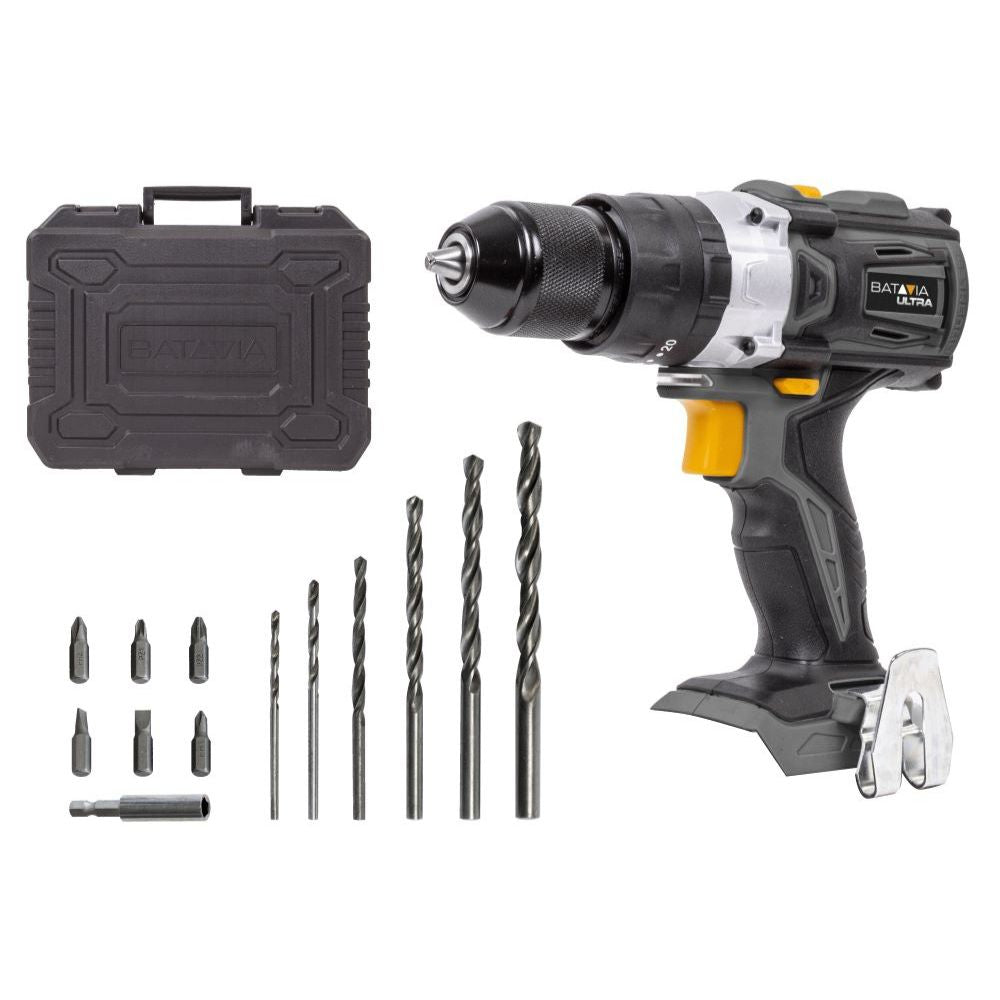
Screw battens over the membrane and fix plasterboard, OSB or timber cladding to them. A cordless drill driver from the Maxxpack 18V range makes this quicker, because you can move between the rafters without a cable getting in the way.
How do you insulate an internal wall?
A solid external wall without a cavity, or a cavity that is not suitable for filling, can be insulated from the inside with a stud wall lining. Fix a timber or metal frame against the wall, fill the gaps with insulation, fit a vapour control layer and finish with plasterboard. Pay close attention to the junctions with the floor, ceiling and window frames, because cold bridges form easily there.
Have a cavity wall checked by a specialist installer. They will assess whether the cavity is clean and wide enough and then blow the insulation in through small holes drilled in the mortar joints.
Which tools do you need?
- insulation knife and a long straightedge
- handsaw or jigsaw for boards
- staple gun for the membrane, such as the Batavia tacker multi-tool
- cordless drill driver
- tape measure, spirit level and pencil
- stepladder or platform that stands firmly
What about safety?
When handling glass wool or mineral wool, wear long sleeves, gloves, safety glasses and a dust mask with at least an FFP2 filter. Make sure you have a stable surface to work from in the loft, and never step between the joists onto the ceiling of the room below. Do not touch any wiring without first switching off the circuit at the consumer unit.
How do you prevent damp and mould?
A well-insulated room is more airtight. Make sure it is properly ventilated with trickle vents, extractor fans or a mechanical ventilation system. Always place the vapour control layer on the warm side and tape the joints well. Never insulate over damp walls or under a leaking roof.
Common mistakes
- Fitting the vapour control layer on the wrong side of the insulation.
- Leaving gaps between boards, which greatly reduces how well the insulation works.
- Packing insulation too tightly into the roof slope so the ventilation gap disappears.
- Blocking off ventilation after insulating.
- Cutting or sanding old materials without knowing whether they contain asbestos.
Frequently asked questions about loft and wall insulation
Which is cheaper: insulating the loft or the walls?
Insulating a loft yourself is usually the cheapest measure, because you only pay for materials and tools. Cavity wall insulation has to be done by a specialist, but often gives a good return per square metre too. Get a quote and compare it with the cost of the materials for a DIY job.
Can I insulate a loft in a weekend?
A small loft can often be done in a weekend if two of you work together and have all the materials ready. Larger lofts, or lofts where you also need to board and finish the walls, take longer. Plan for dry weather if you also need to work on the roof.
Do I always need a vapour control layer?
With glass wool or mineral wool rolls, and with most other materials, yes. Foil-faced PIR boards act as a vapour control layer themselves, provided you tape all the joints. Always follow the advice of the manufacturer of your insulation.
How thick should the insulation be?
That depends on the material and the R-value you want to reach. The better the material insulates, the thinner the layer can be. The packaging states which R-value a given thickness achieves, and building control can tell you what the regulations require for your project.
In short: loft or wall insulation
Start with the loft or roof, as that is where most heat escapes, and leave cavity wall insulation to a specialist. With the right material, a vapour control layer on the warm side and basic tools, you can insulate a loft or line an internal wall yourself. Work safely, keep the room ventilated and never disturb materials that might contain asbestos.