6 minute read -
Which Saw Blade Should You Use for MDF?
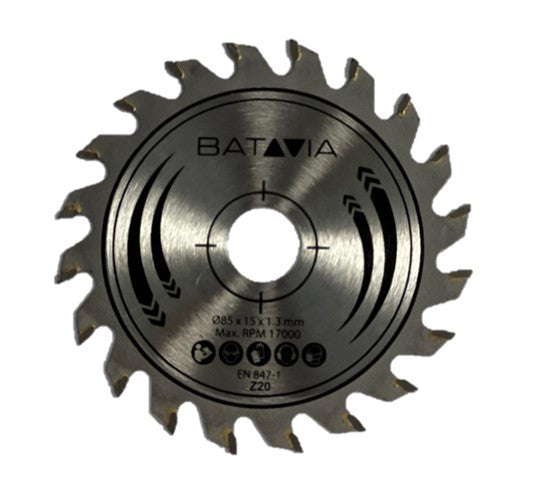
For MDF, use a carbide-tipped (TCT) saw blade with a high tooth count. On a circular saw or mitre saw that means a fine TCT blade for sheet material; on a jigsaw, a fine blade for wood or board. Cut at a steady, even pace: too slow and the edge burns, too fast and it comes out rough.
Choosing the right saw blade for MDF makes more difference than the saw itself. Below you will find which tooth shape to pick, how to stop fraying and burning, and how to protect yourself from the fine dust.
What will you learn in this article?
- Why does MDF need a different blade from solid wood?
- Which blade should you use on a circular saw or mitre saw?
- Which jigsaw blade should you use for MDF?
- How do you cut MDF without fraying?
- Why does MDF burn when you cut it?
- How do you cut curves in MDF?
- Cutting painted, coated or moisture-resistant MDF
- Is MDF dust harmful?
- How long does a saw blade stay sharp in MDF?
- Frequently asked questions about saw blades for MDF
- In short: saw blades for MDF
Why does MDF need a different blade from solid wood?
MDF is made from fine wood fibres pressed into a board with resin. It has no grain, so it does not split along the grain the way solid timber does. That makes it easy to cut. At the same time the board contains a lot of resin, and that resin blunts ordinary steel teeth quickly. A blunt blade starts rubbing instead of cutting, which leads to heat, scorch marks and a fluffy edge.
That is why a blade with carbide-tipped teeth works best. Carbide stays sharp far longer in sheet material than HSS or ordinary tool steel.
Which blade should you use on a circular saw or mitre saw?
Choose a TCT blade intended for sheet material or fine joinery. Two tooth grinds are common:
| Tooth grind | Suitable for | Result |
|---|---|---|
| Alternate top bevel (ATB) | Bare MDF, fine joinery | Smooth cut, good for visible work |
| Triple-chip grind (TCG) | Painted or coated MDF, melamine | Less chipping of the hard top layer |
The more teeth, the finer the cut, but the slower the blade cuts. A coarse framing blade with few teeth is designed for fast cuts in timber and leaves a ragged edge in MDF. The right number of teeth depends on the blade diameter and your saw, so look for a blade the manufacturer describes as suitable for MDF or fine panel cutting. Also check that the bore size and the blade's maximum speed match your saw.
A cordless circular saw or mitre saw from the Maxxpack 18V range handles MDF well, as long as you fit a suitable fine blade.
Which jigsaw blade should you use for MDF?
For a jigsaw, choose a blade with fine teeth for wood or board. Pay attention to three things:
- Fine teeth: a blade with small, closely spaced teeth gives a clean edge. Coarse wood blades are for fast work in rough timber.
- Straight or curved cuts: a wider blade stays straighter. For curves, use a narrow blade that turns more easily.
- Blade material: HCS blades are fine for occasional cuts in MDF. If you cut a lot, bi-metal or carbide blades stay sharp for longer.
If you want to keep the top face especially clean, use a blade with reversed teeth. It cuts on the downstroke, so the visible face does not splinter.
How do you cut MDF without fraying?
- Put the good face the right way round. With a jigsaw or handheld circular saw it goes down; with a mitre saw or table saw it goes up.
- Run masking tape along the cutting line on painted or coated MDF.
- Support the board on both sides of the line so it does not sag and pinch the blade.
- Set the cutting depth of a circular saw so the blade comes out just a few millimetres below the board.
- Use a guide rail or a clamped batten for long straight cuts.
- Switch off the jigsaw's pendulum action or set it to its lowest setting.
Why does MDF burn when you cut it?
Brown or black edges come from friction heat. The most common causes are:
- A blunt blade: the teeth no longer cut and the blade rubs against the material.
- Feeding too slowly: the blade spins in the same spot for too long.
- A pinched blade: the board sags or the kerf closes up.
- Resin or glue build-up on the blade: clean the blade with a suitable blade cleaner.
Push too hard and too fast, on the other hand, and you get a rough, torn edge. Find the pace at which the machine stays up to speed and the blade moves steadily through the board.
How do you cut curves in MDF?
Draw the shape and cut it with a jigsaw fitted with a narrow, fine blade. Cut a few millimetres outside the line and finish to the line with abrasive paper or a sander. For tight curves, first make a few relief cuts at right angles to the line, so the waste falls away in pieces and the blade does not jam. For internal shapes, drill a starting hole large enough for the blade first.
For repeated shapes or profiles, a router with a template gives a neat result.
Cutting painted, coated or moisture-resistant MDF
Painted MDF and melamine-faced MDF have a hard top layer that chips easily. Use a triple-chip blade, tape the cutting line and put the good face the right way round. Moisture-resistant MDF, often recognisable by its green core, is cut with the same blades, but expect the blade to wear faster.
Is MDF dust harmful?
MDF dust is very fine and stays in the air for a long time. It can irritate your airways, eyes and skin, and the resin may contain formaldehyde-based binders. So take precautions:
- Cut outdoors or in a well-ventilated room if possible.
- Connect a vacuum or dust extractor to the saw.
- Wear a dust mask rated at least FFP2, and preferably FFP3 for longer jobs.
- Wear safety glasses and ear defenders.
- Clean up with a vacuum cleaner, not a broom.
How long does a saw blade stay sharp in MDF?
That depends on the blade material, how much you cut and the thickness of the boards. A carbide blade lasts much longer than a steel one. Watch for the signs: you need more force, the edge scorches or frays, or the saw starts to pull to one side. A TCT circular saw blade can be resharpened; jigsaw blades are simply replaced.
Frequently asked questions about saw blades for MDF
Can I cut MDF with an ordinary wood blade?
You can, but a coarse wood blade leaves a ragged edge and wears quickly because of the resin in the board. For clean cuts, use a fine carbide-tipped blade.
Which saw is best for MDF?
For long straight cuts, a circular saw with a guide rail or a table saw. For cutting to length, a mitre saw. For curves and cut-outs, a jigsaw.
How do I stop the edge of MDF going fluffy?
Use a sharp, fine blade and cut at an even pace. Sand the edge lightly afterwards and seal it with primer or filler before painting, because MDF edges soak up a lot of paint.
Do I need to wear a mask when cutting MDF?
Yes. MDF dust is very fine and can harm your airways. Wear at least an FFP2 mask and use extraction or good ventilation.
In short: saw blades for MDF
For MDF, choose a carbide-tipped blade with a high tooth count: alternate top bevel for bare MDF, triple-chip grind for painted or coated boards. On a jigsaw, use a fine blade, and a narrow one for curves. Cut at a steady, even pace, support the board and protect yourself from the fine dust.