6 minute read -
Installing MVHR Yourself: Preparation, Fitting and Limits
You can prepare and fit a large part of an MVHR system (mechanical ventilation with heat recovery) yourself: hanging the unit, running the ducting, drilling the wall and floor penetrations and fitting the air valves. The duct design, balancing the airflows and any new electrical circuit are jobs for a ventilation specialist or qualified electrician.
For most existing homes, a single-room (decentralised) MVHR unit is the most realistic option to install entirely on your own.
What will you learn in this article?
- How does ventilation with heat recovery work?
- Whole-house or single-room MVHR: which suits you?
- Which jobs can you do yourself?
- What should you leave to a professional?
- Which tools do you need?
- How to install MVHR step by step
- Maintenance: filters and valves
- Frequently asked questions about installing MVHR
- In short: installing MVHR yourself
How does ventilation with heat recovery work?
An MVHR unit extracts damp, stale air from the kitchen, bathroom and toilet and supplies fresh outdoor air to the living room and bedrooms. Inside the unit, both airflows pass each other through a heat exchanger. The warmth of the outgoing air is transferred to the cold incoming air without the two streams mixing. That way you ventilate continuously without blowing the heat out of your home.
Whole-house or single-room MVHR: which suits you?
| Whole-house MVHR | Single-room MVHR | |
|---|---|---|
| Layout | One unit, ducts to every room | Separate units per room in the outside wall |
| DIY installation | Partly, design and balancing by a specialist | Manageable for an experienced DIYer |
| Structural work | A lot: ducts through floors and walls | Little: one penetration per unit |
| Best for | New builds, major renovations | Existing homes, a few rooms |
With a whole-house system the duct layout has to be right: the correct diameters, short runs and a good distribution across the rooms. Have that design drawn up by a ventilation specialist or the supplier.
Which jobs can you do yourself?
- Hanging the unit on a solid wall or bracket
- Fitting and fixing ducts and fittings
- Drilling penetrations for ducts and valves
- Fitting valves in the ceiling or wall
- Insulating ducts in unheated spaces
- Connecting the condensate drain to the waste pipe via a trap
- Replacing filters and keeping the system clean
What should you leave to a professional?
- Designing the duct system and calculating the required ventilation rates
- Balancing the airflow at each valve with measuring equipment
- A new circuit or fixed (fused spur) connection from the consumer unit
- Roof penetrations if you cannot work safely on the roof
Have the system checked once it is running as well. A poorly balanced MVHR system can cause draughts, noise or too little ventilation.
Which tools do you need?
- A rotary hammer with a chisel function for chases and smaller holes in masonry
- A diamond core drill for large round holes in an outside wall or concrete, in the diameter the manufacturer specifies
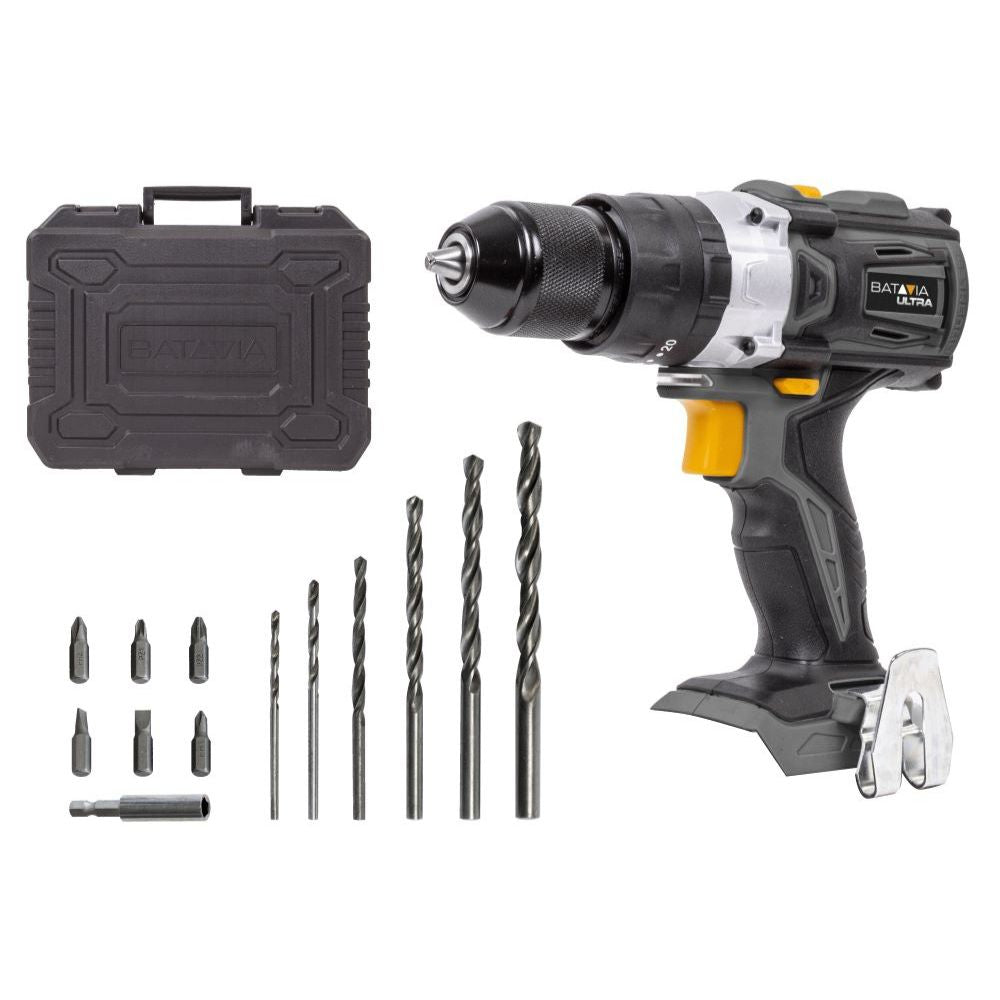
- A cordless drill driver for brackets, hangers and duct clips, for example from the Maxxpack 18V range
- A jigsaw or multi-tool for openings in ceilings or sheet material
- A hole saw for valves in plasterboard
- Spirit level, tape measure, cable and pipe detector and aluminium tape
- Dust mask, safety glasses and ear defenders
How to install MVHR step by step
Choose the location of the unit
Hang the unit in a frost-free space, such as the loft, a plant room or a utility room. Pay attention to the following:
- The wall must be able to carry the weight and vibration. A timber stud wall or thin plasterboard partition is often not strong enough.
- You need room for maintenance: changing filters and opening the unit.
- You need a socket nearby and a drain for condensate.
- The ducts to the outside should be as short as possible.
Drill the penetrations
Use a rotary hammer or core drill for ducts through floors and walls. Work like this:
- Mark out the penetrations and check that you will not hit a joist, reinforcement or a pipe.
- Drill large holes with a core drill instead of chopping them out. You get a neater opening and less damage.
- Use a core drill with dust extraction, or drill wet in concrete.
- Make sure the outside terminals for intake and exhaust are far enough apart, as set out in the manual.
Mount the unit and ducts
- Hang the unit level using the supplied bracket and anti-vibration mounts.
- Fit the ducts with as few bends as possible. Every bend costs air pressure and adds noise.
- Secure ducts with clips so they do not sag or rattle.
- Insulate ducts in unheated spaces, especially the ducts to and from outside, to prevent condensation.
- Seal all joints with aluminium tape or the seal the manufacturer specifies.
Connect the condensate drain and power
The heat exchanger produces condensate. Connect the drain to the waste pipe via a trap so no sewer smells can enter the unit. Let the drain pipe fall slightly.
Most units have a plug for an ordinary socket. If a new circuit or a fixed connection is needed, have a qualified electrician do it. Switch off the power whenever you work on the unit or its controls.
Test and have the system balanced
Switch the system on and check that every valve moves air and that there are no leaks or rattling ducts. Then have the installation balanced: using a meter, the correct airflow is set for each valve. Keep the commissioning report with the unit's paperwork.
Maintenance: filters and valves
- Replace or clean the filters according to the manufacturer's schedule. Many units give a reminder themselves.
- Clean the valves, but do not turn their settings, or the balancing will no longer be correct.
- Check the condensate drain and trap once a year.
Frequently asked questions about installing MVHR
Are you allowed to install an MVHR system yourself?
Yes, you can do the installation work yourself. For a system that works properly, you do need a correct design and professional balancing. For new electrical circuits, call in a qualified electrician.
Which drill do you use for a ventilation hole in an outside wall?
For large round holes, use a diamond core drill in the diameter the manufacturer specifies. For smaller holes and chases, a rotary hammer works well. Check for pipes, cables and reinforcement beforehand.
Why do MVHR ducts need insulating?
In a cold space, moisture from the air can condense on or inside the ducts. That leads to dripping water and damp patches. Insulation prevents this and also limits heat loss.
How often should you replace MVHR filters?
That is stated in the unit's manual and depends on the surroundings, for example more dust or pollen. Many units show a filter warning. Clogged filters reduce the airflow and make the unit work harder.
In short: installing MVHR yourself
You can do most of the hands-on work of an MVHR installation yourself, from hanging the unit to drilling penetrations and insulating the ducts. Leave the duct design, airflow balancing and any new circuit to professionals. For an existing home, single-room units are the easiest route to a fully DIY installation.