7 minute read -
Cutting PIR Insulation Board: Clean, Quick Cuts Without Gaps
To cut PIR insulation board, use a sharp snap-off knife for thin boards and an insulation saw, a reciprocating saw with an insulation blade or a circular saw for thicker boards. Measure carefully, cut a few millimetres oversize so the board fits snugly, then seal the joints with aluminium foil tape and expanding foam.
That way you avoid gaps where heat escapes. Below you will find which tool suits which thickness and how to get a tight fit between joists and rafters.
What will you learn in this article?
- What makes PIR different to cut?
- Which saw should you use for which board thickness?
- Can you cut PIR with a knife?
- How do you cut PIR with an insulation saw or reciprocating saw?
- How do you cut PIR with a circular saw?
- How do you get a tight fit between joists or rafters?
- How do you cut PIR at an angle or make a cut-out?
- How do you seal the joints after cutting?
- Is PIR dust harmful?
- How do you cut with as little mess as possible?
- Frequently asked questions about cutting PIR board
- In short: cutting PIR insulation board
What makes PIR different to cut?
PIR is a rigid insulation foam, usually with a layer of aluminium foil or another facing on both sides. The foam itself is light and easy to work, but it crumbles at the edges if you use a coarse saw. The foil can tear or fray. A clean cut matters: every gap between the board and a joist is a leak in your insulation.
PIR does not melt the way polystyrene (EPS) does. If a blade gets hot because it is blunt or you push too hard, the cut edge can still discolour or char. A sharp blade and a steady pace prevent that.
Which saw should you use for which board thickness?
| Tool | Suitable for | Advantages | Disadvantages |
|---|---|---|---|
| Snap-off knife | Thin boards | Quiet, little dust | Hard to keep straight on thick boards |
| Insulation saw (handsaw) | All thicknesses | Cheap, straight with a little practice | Takes more time |
| Reciprocating saw with insulation blade | Thick boards, large jobs | Fast, also in awkward corners | Needs a long blade for thick boards |
| Circular saw | Long straight cuts | Clean and fast | Lots of fine dust, limited cutting depth |
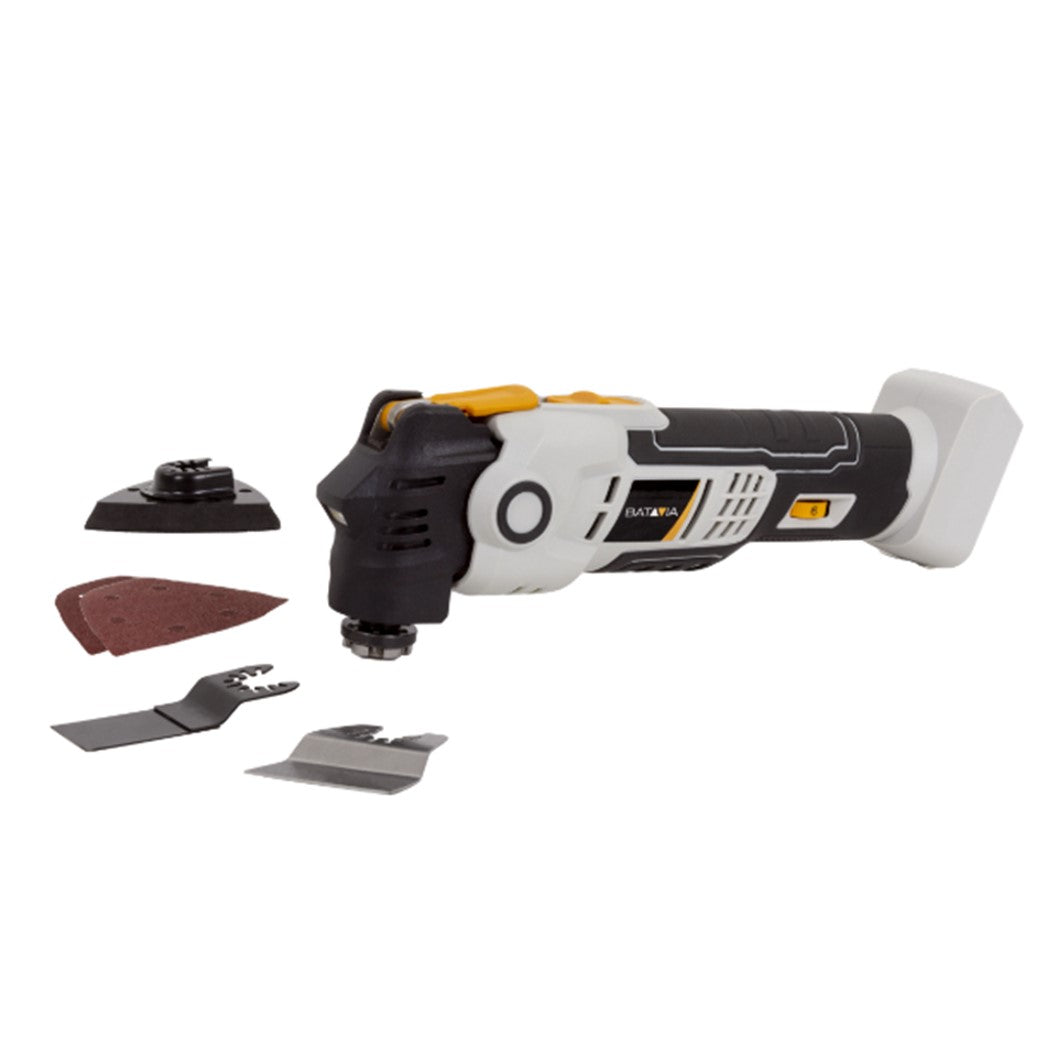
| Multi-tool with wave-edge blade | Cut-outs, trimming | Precise in tight spots | Slow for whole boards |
A cordless reciprocating saw or circular saw from the Maxxpack 18V range is handy in a loft or crawl space, where there is not always a socket nearby. With a circular saw, check the specifications of your saw for its maximum cutting depth and compare it with the thickness of your boards. If the board is thicker, cut from both sides or choose a different saw.
Can you cut PIR with a knife?
With thin boards, yes. Lay a straightedge along the line and score through the foil and well into the foam with a sharp snap-off knife in a few passes. Turn the board over, score the foil on the other side and snap the board over a straight edge. Use a fresh blade: a blunt one drags the foil with it. With thicker boards, the cut face ends up at an angle and the board does not snap cleanly. A saw is the better option there.
How do you cut PIR with an insulation saw or reciprocating saw?
- Mark the line with a straightedge on both faces of the board.
- Rest the board on two trestles or timbers so it is well supported and does not break off at the end.
- Hold the saw square to the board. An insulation saw with wave-edge teeth cuts in both directions, so make long, steady strokes.
- On a reciprocating saw, fit a long insulation blade with a wave edge or fine teeth. Standard wood blades tear the foam.
- Let the weight of the saw do the work rather than pushing.
How do you cut PIR with a circular saw?
A circular saw gives the cleanest straight cut, especially with a guide rail or a clamped batten. Use a fine carbide-tipped blade for wood or sheet material and set the cutting depth a few millimetres deeper than the board. The downside is the dust: the foam is ground fine and spreads a long way. Connect a vacuum or cut outdoors.
How do you get a tight fit between joists or rafters?
Measure in several places
Joists and rafters are rarely perfectly parallel. Measure the gap at the top, in the middle and at the bottom.
Cut a few millimetres oversize
That way the board grips and stays in place without needing to be forced. More than a few millimetres is too much: the board will bow or break.
Cut square
An angled cut leaves a gap on one side.
Press the board in evenly
Use your hands or a flat offcut of board, not a hammer.
With a pitched roof, also leave the gap to the roof deck and the ventilation space set out in your insulation plan or by the manufacturer. When insulating a roof, pay attention to the vapour control side: it goes on the warm side.
How do you cut PIR at an angle or make a cut-out?
For angled cuts, such as under a roof slope or along a knee wall, copy the angle with a sliding bevel and mark it on the board. With a circular saw you can tilt the blade; with a handsaw or reciprocating saw, cut along a clamped batten.
For a pipe or electrical box, first drill a hole in the right place with a hole saw or flat wood bit. If the board needs to fit around a pipe, cut in from the edge to the hole. A multi-tool with a wave-edge blade is useful for small cut-outs that need to fit precisely.
How do you seal the joints after cutting?
- Small gaps between board and joist can be filled with expanding foam or flexible insulation foam. Use it sparingly, because it expands.
- Joints between boards are sealed with aluminium foil tape, applied to clean, dry foil.
- Cured foam can be trimmed flush with a snap-off knife.
- Repair damaged foil with aluminium foil tape as well.
The cut face itself does not need sanding. Remove any loose crumbs or burrs with a knife or a piece of sandpaper.
Is PIR dust harmful?
PIR dust can irritate the eyes, skin and airways. So wear:
- a dust mask rated at least FFP2;
- safety glasses;
- gloves and long sleeves;
- ear defenders when using power tools.
Work in a ventilated space and vacuum up the dust rather than sweeping it.
How do you cut with as little mess as possible?
Cut outdoors, or at one fixed spot with a large dust sheet underneath. A knife and an insulation saw make much less dust than a circular saw. Keep the offcuts: they are often useful for small bays and edges.
Frequently asked questions about cutting PIR board
Can I cut PIR with an ordinary wood saw?
You can, but coarse teeth tear the foam and the foil. An insulation saw or a fine-toothed saw gives a much cleaner edge.
How much bigger than the gap should I cut a PIR board?
A few millimetres is enough to make the board grip. Any more and you have to force it in, and it can bow or break.
Which side of a PIR board faces inwards?
That depends on the type of board and how you are using it. Always follow the manufacturer's installation guidance, especially regarding the vapour control layer, which usually goes on the warm side.
Can I use expanding foam between PIR boards?
Yes, expanding foam works well for small gaps. Apply it sparingly, let it cure and trim off the excess flush. Then seal the joints with aluminium foil tape.
In short: cutting PIR insulation board
Choose your tool by board thickness and the size of the job: a knife for thin boards, an insulation saw or reciprocating saw for thick boards, and a circular saw for long straight cuts. Measure in several places, cut a few millimetres oversize and seal every joint afterwards with tape and foam.