6 minute read -
Sanding a Door: The Right Sander and Approach for Every Type of Door
For a flat door, an orbital sheet sander or a random orbit sander is the best choice, and for corners and mouldings you use a detail sander or sand by hand. If you only need to key the surface for a new coat of paint, sand with P120 to P180. If the old paint has to come off completely, start with P60 or P80 and work up to P120 or P150.
Sanding a door properly comes down to matching the sander to the type of door and following the grits in the right order. Here is how to do it.
What will you learn in this article?
- Which sander suits your door?
- Which grit should you choose?
- Should you take the door off its hinges?
- How do you sand a door step by step?
- Does a door need to be stripped back to bare wood?
- Sanding a sticking door
- How long does it take?
- Safety with old paint
- Common mistakes
- Frequently asked questions about sanding a door
- In short: sanding a door
Which sander suits your door?
| Machine | Best for | Note |
|---|---|---|
| Orbital sheet sander | Flat doors, panels, edges | Rectangular pad reaches into square corners |
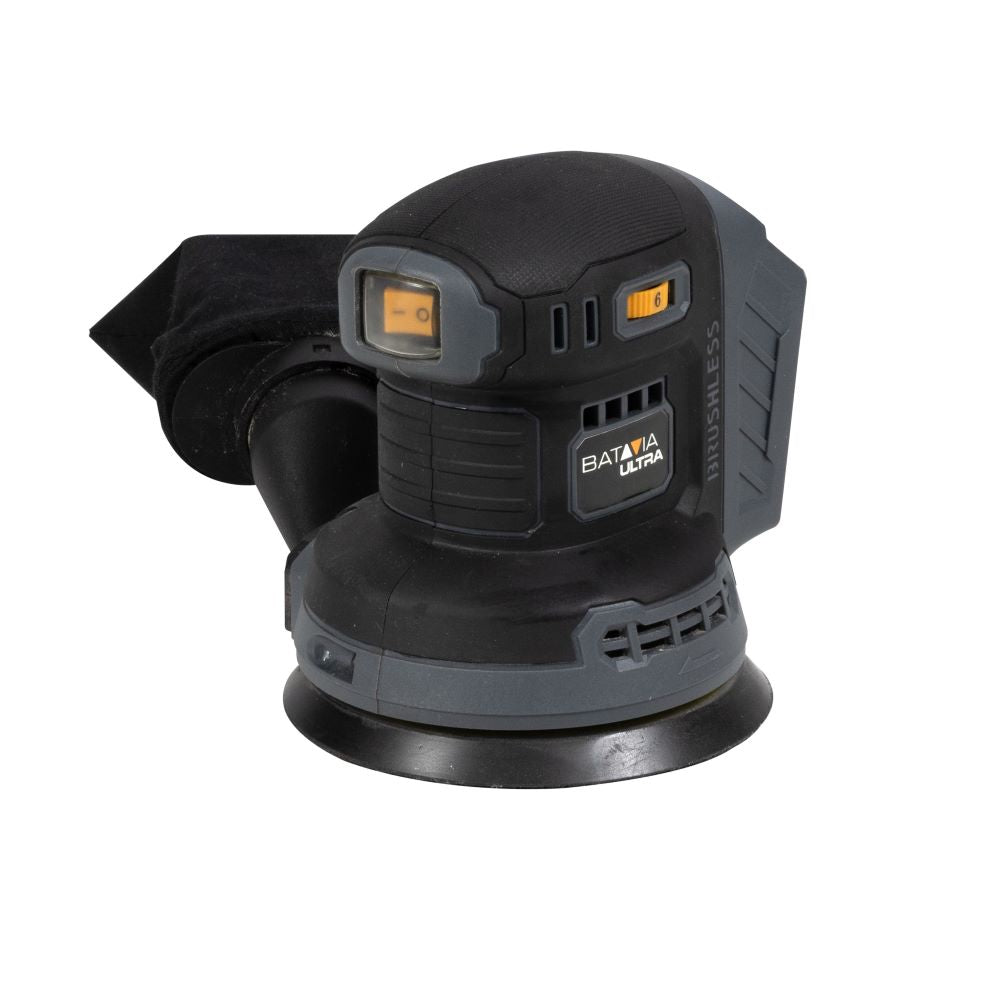
| Random orbit sander | Large flat areas, stripping, fine finishing | Round pad, does not reach into corners |
| Detail sander | Corners, around glazing beads, mouldings | Small pad, for details only |
| Multi-sander | One machine for flat areas and corners | Interchangeable pads |
| Belt sander | Thick old paint layers on flat doors | Removes a lot quickly, including wood |
A combination of an orbital sheet sander or random orbit sander and a detail sander covers almost any door. Save the belt sander for thick, flaking layers of paint on a flat door. Use it carefully, because it quickly cuts through the paint into the wood and can even go through the top layer of veneer. A drywall sander is meant for walls and ceilings and you do not need one for a door.
Which grit should you choose?
- P60 to P80: removing old, thick or loose layers of paint.
- P100 to P120: smoothing bare wood and removing small imperfections.
- P150 to P180: keying existing paint or varnish before a new coat.
- P240: light sanding between two coats of varnish.
Always sand from coarse to fine and do not skip a grit. A sander with dust extraction and perforated hook-and-loop sanding discs keeps the abrasive clean for longer.
Should you take the door off its hinges?
You do not have to, but it is easier. Laid flat on two trestles, you can sand with even pressure and there is no risk of the sander slipping. You can also sand and paint the top and bottom edges, which helps stop moisture getting in. Before taking the door off, remove the door furniture first: handles, escutcheon plates and the lock if needed.
How do you sand a door step by step?
Clean and check
Clean the door with a degreaser. Otherwise grease and dirt will smear across the abrasive. Check whether the paint is firmly attached or flaking. Remove any loose paint first with a paint scraper.
Sand the flat areas
Sand the large flat areas with the orbital sheet sander or random orbit sander. Move steadily in overlapping strokes and keep the sander flat on the surface. Do not tilt it, or you will create small dips. On bare wood, sand in the direction of the grain.
Sand corners and mouldings
Do the corners of the panels and the edges around the glazing beads with the detail sander. Sand rounded mouldings by hand with a sanding sponge. A machine will quickly distort the profile there.
Edges and sides
Sand the sides of the door as well. Lightly round off sharp edges with a sanding block so the paint holds better there.
Remove the dust
Vacuum off the dust and wipe the door with a slightly damp cloth or a tack cloth. Let the door dry before applying primer, paint or varnish.
Does a door need to be stripped back to bare wood?
No, that is usually not necessary. If the old paint is firmly attached, just sand it until it is matt. That gives the new coat something to grip. Stripping to bare wood is needed if the paint is flaking, if there are so many layers that the mouldings have filled in, or if you are switching from paint to a clear varnish or wood stain.
Sanding a sticking door
If the door sticks by a few millimetres, you can sand down the edge with a belt sander or an orbital sheet sander and a coarse grit. Mark where the door sticks first. If more than a few millimetres need to come off, plane or saw the door down instead. Always seal the new edge afterwards with primer or varnish, or the wood will absorb moisture and swell again.
How long does it take?
Sanding a flat door with a machine takes about half an hour per side. A panelled door with lots of mouldings, or a door that needs stripping completely, can easily take a few hours. Add the drying time of the primer and varnish on top of that.
Safety with old paint
Wear a dust mask with an FFP2 filter, safety glasses and ear protection. Work in a well-ventilated room and clean up dust with a vacuum cleaner that has a fine dust filter.
Common mistakes
- Sanding with too coarse a grit, so scratches show through the new paint.
- Tilting the sander on the edge of the door.
- Sanding mouldings with a machine and losing their shape.
- Skipping the top and bottom edges when finishing.
Frequently asked questions about sanding a door
Which sander is best for a door?
An orbital sheet sander or random orbit sander for the flat areas, combined with a detail sander for the corners. A multi-sander combines these functions in one machine. A cordless sander from the Maxxpack 18V range is handy if you sand the door while it is still hanging in the frame.
Which grit should I use to key a door?
For paint that is firmly attached, P150 to P180 is enough. If the surface is rough or has small dents, start with P120 and finish with P180.
Can I sand a door without taking it off?
Yes, you can. Wedge the door with a door stop or wedge so it cannot move. Working with the door laid flat is quicker, though, and gives a more even result.
How do I get old paint off a door quickly?
Thick layers come off quickly with a belt sander and P60 or P80, or with a paint scraper and a heat gun. If the paint may contain lead, do not dry sand it and do not use a heat gun at high temperature, as both release lead dust or fumes.
In short: sanding a door
Use an orbital sheet sander or random orbit sander for the flat areas and a detail sander or sanding sponge for corners and mouldings. Key sound paint with P150 to P180 and only strip the door when the paint is flaking or clogged. Work from coarse to fine, remove the dust before painting and take care with old paint that may contain lead.