7 minute read -
Sanding a Steel Boat: Which Sander and Grit Should You Use?
For a steel boat you need two kinds of machine: an angle grinder with a flap disc or fibre disc for rust and bare patches, and a random orbit sander for keying existing paint and primer. Work from P40 to P80 on rust and bare steel, up to P120 to P180 between coats.
When sanding a steel boat, never dry-sand old antifouling, because it contains toxic substances.
What will you learn in this article?
- Why sand a steel boat?
- Which sander should you use on a steel boat?
- Which grit should you use?
- Step by step: sanding and painting a steel boat
- Old antifouling: do not dry-sand it
- Protection while sanding
- Is sanding a GRP or wooden boat different?
- Common mistakes
- Frequently asked questions about sanding a steel boat
- In short: sanding a steel boat
Why sand a steel boat?
Steel rusts as soon as water and oxygen reach the metal. The paint system on a steel boat is the only barrier against that. Small damage, blisters or rust spots spread under the paint if you leave them. By sanding and touching up regularly, you keep the paint system sealed.
How often that is needed depends on your mooring, fresh or salt water and how much you use the boat. Many owners touch up the hull every year or every other year and check it each time the boat comes out of the water.
Which sander should you use on a steel boat?
| Machine | What for | Abrasive |
|---|---|---|
| Angle grinder | Rust, mill scale, welds, taking steel back to bare metal | Flap disc or fibre disc, P40 to P80 |
| Random orbit sander | Keying existing paint and primer, large areas | Sanding disc, P80 to P180 |
| Detail sander | Corners, around fittings and small areas | Sandpaper, P80 to P180 |
| Hand sanding block and sanding sponge | Details, curves, final check | Fine paper or sanding sponge |
Angle grinder for rust and bare steel
An angle grinder is the quickest way to remove rust and loose paint down to bright steel. Use a flap disc for a reasonably flat finish, or a fibre disc for fast, coarse work. A wire brush on the angle grinder is handy for pitted rust and awkward shapes. Work with light pressure and keep the disc moving, so you do not grind deep grooves into the plate. For more on tackling corrosion, see our guide on how to remove rust from metal.
A cordless angle grinder, for example from the Maxxpack 18V range, is useful on the hard standing where there is no power near the boat.
Random orbit sander for paint and primer
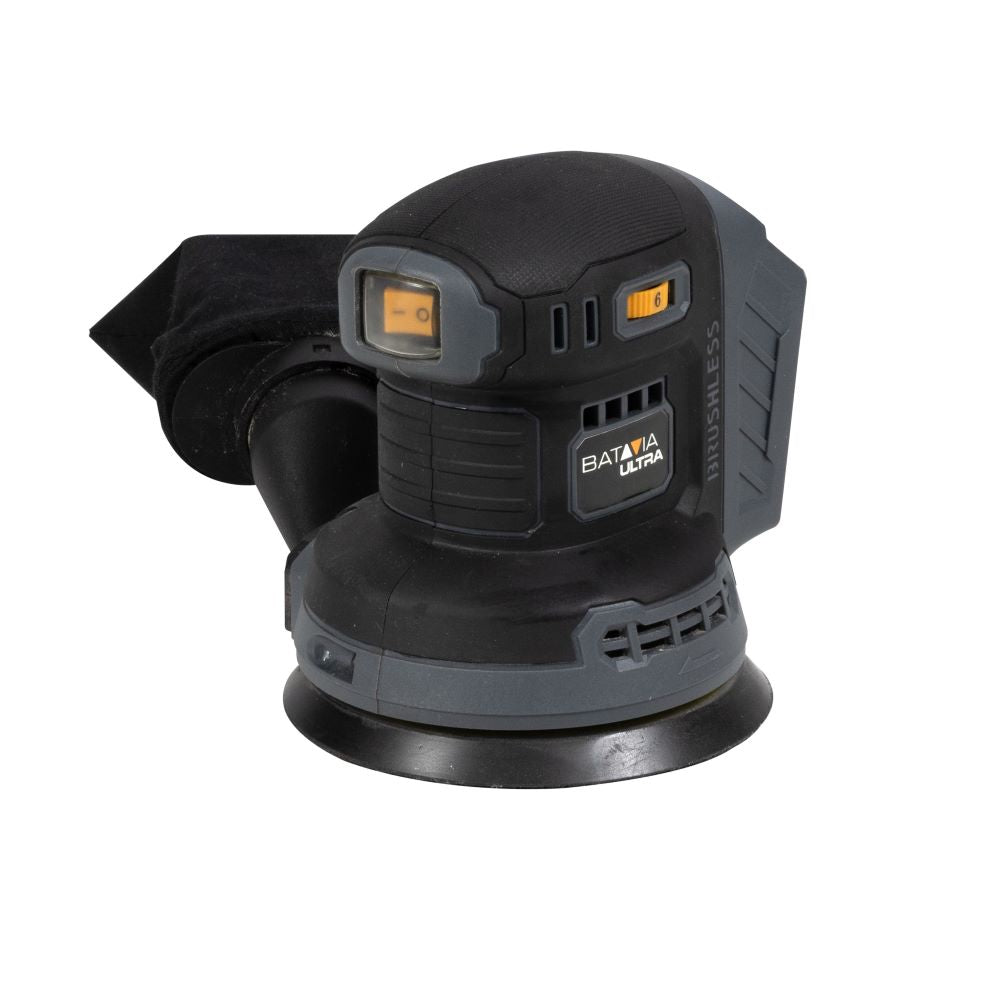
Where the paint is still sound, you do not need to go down to bare steel. Just key the old layer with a random orbit sander. It sands flatter than an angle grinder and leaves fewer scratches. For large areas a model with a 150 mm disc is comfortable to use, and on smaller boats 125 mm works well too.
Detail sander and hand sanding
Around bollards, portholes, stanchion bases and in corners, a round disc cannot reach properly. A detail sander with a pointed pad, or simply a sanding block, works better there.
Which grit should you use?
- P40 to P60: grinding off rust, old paint and welds on bare steel.
- P80: keying the steel for primer so it adheres well.
- P120 to P180: sanding between coats of primer and paint.
- P240 or finer: only for a final gloss coat, if the paint manufacturer specifies it.
Always check the technical data sheet for your paint or primer. It states the surface profile and grit the manufacturer recommends.
Step by step: sanding and painting a steel boat
Lift the boat out
Put the boat on the hard and let the hull dry thoroughly.
Clean the hull
Clean the hull with a pressure washer or a stiff brush and a boat cleaner. Remove fouling, oil and dirt.
Inspect and mark
Go over the hull for rust, blisters, dents and loose paint, and mark those areas.
Grind out the rust
Grind rust spots back to bright steel with the angle grinder. Feather the edges of the surrounding paint so they blend in.
Key the remaining paint
Key the rest of the paint with the random orbit sander.
Remove dust and degrease
Remove all the dust and degrease with the thinner or degreaser recommended for your paint system.
Prime the bare steel
Apply primer to bare steel as soon as possible, ideally the same day. Bare steel starts rusting again within a short time, especially in damp air.
Sand between coats
Sand lightly between coats with fine paper and remove the dust each time.
Apply the top coat and antifouling
Finish with the top coat and, below the waterline, an antifouling suited to the waters you sail in.
Old antifouling: do not dry-sand it
Antifouling contains biocides such as copper compounds. Older layers may even contain substances that are now banned. The dust is harmful to your health and to the water. So follow these rules:
- Wet-sand antifouling or use a sander with good dust extraction.
- Lay sheeting under the boat and collect all the residue.
- Dispose of the residue as hazardous waste.
- Ask your marina or boatyard about their rules. Many do not allow dry sanding or require you to work on a designated wash-down area.
- If you want to remove the old layers completely, consider a stripper made for antifouling.
Protection while sanding
- Wear a dust mask with at least an FFP2 filter, and for antifouling preferably FFP3 or a mask with a P3 filter.
- Use safety glasses or a face shield, especially with the angle grinder.
- Wear ear defenders and work gloves.
- Keep the guard on the angle grinder and use the side handle.
- Watch out for sparks. Do not work near fuel, gas bottles or solvents.
- Make sure you are standing securely. If you are on a trestle platform or stepladder next to the boat, check that it is stable.
Is sanding a GRP or wooden boat different?
Yes. Sand GRP (fibreglass) with finer grits and without an angle grinder, because the gelcoat is easily damaged. Sand wooden boats with the grain, from coarse to fine, often finishing around P150 to P180 for varnish or paint. For both, a random orbit sander is the most practical machine for large areas and a detail sander for the corners.
Common mistakes
- Leaving bare steel untreated for too long, so flash rust appears before the primer goes on.
- Grinding too deep with the angle grinder, so the plate gets thinner or wavy.
- Not degreasing after sanding, so the primer does not adhere well.
- Mixing paint products that are not compatible. Stick to one paint system.
- Dry-sanding antifouling without extraction or a way to catch the dust.
Frequently asked questions about sanding a steel boat
Can I sand a steel boat with just a random orbit sander?
For keying paint that is still sound, yes. For rust and taking steel back to bare metal it is too slow and less effective. Use an angle grinder with a flap disc or fibre disc for that.
How soon does primer need to go on bare steel?
As soon as possible, ideally within a few hours of sanding and degreasing. Bare steel rusts quickly, especially in damp conditions or dew. If you cannot sand and prime everything in one day, work in small sections.
Should I have a steel boat blasted?
If there is a lot of rust or the whole hull needs redoing, blasting is often quicker and more even than sanding. Have it done by a company with the right equipment. For touching up and small rust spots, sanding and grinding is perfectly manageable.
When is the best time to sand and paint?
Choose dry weather with a temperature and humidity within the range the paint manufacturer specifies. Do not work early in the morning or late in the evening when there is dew on the hull. Moisture on the steel leads to poor adhesion and rust under the paint.
In short: sanding a steel boat
Use an angle grinder with a flap disc for rust and bare patches, and a random orbit sander for keying paint. Work from P40 to P80 on steel up to P120 to P180 between coats, degrease well and prime bare steel quickly. Never dry-sand old antifouling without extraction and a way to collect the dust.