6 minute read -
Sanding a Wall Before Painting: Which Sander Should You Choose?
For a whole wall or a ceiling, a drywall sander with dust extraction is the quickest option. For a few filled patches or a small wall, a random orbit sander or sheet sander with fine sandpaper (P120 to P180) is enough.
When sanding walls before painting, the quality of the finish depends at least as much on the preparation as on the machine.
What will you learn in this article?
- Which sander suits your wall?
- Do you need to sand a painted wall before repainting?
- Preparing the wall before sanding
- Step-by-step: filling and sanding a wall
- Which sandpaper grit should you use on walls?
- Sanding a wall without covering the whole house in dust
- Common mistakes when sanding walls
- Frequently asked questions about sanding walls before painting
- In short: sanding walls before painting
Which sander suits your wall?
Not every sander is made for walls. These are the types you will come across, and what they are and are not good for:
| Type of sander | Suitable for walls? | When to use it |
|---|---|---|
| Drywall sander | Yes, the best choice for large areas | Whole walls, ceilings, plasterboard and plaster |
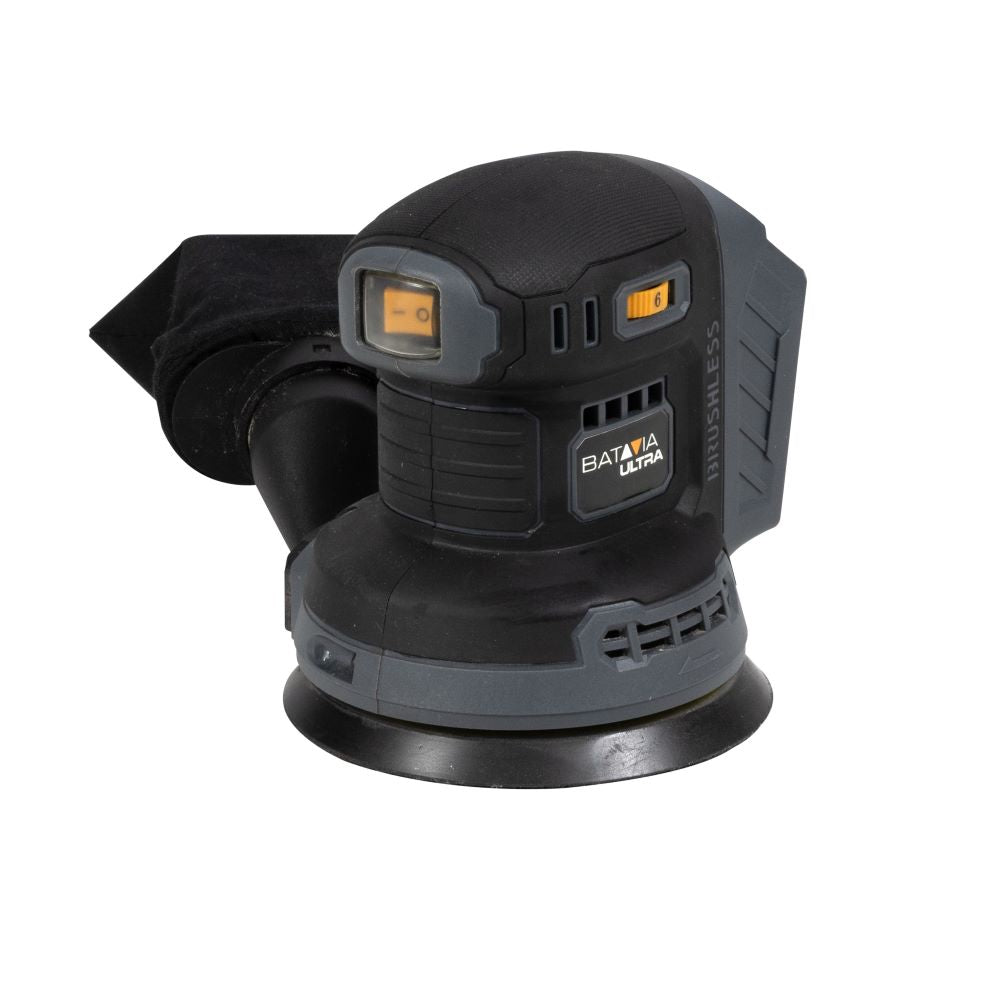
| Random orbit sander | Yes, for smaller areas | Filled patches, lightly keying paint |
| Sheet sander | Yes, for light work | Between coats of paint, small areas |
| Detail sander | Only for details | Corners, along window frames and skirting boards |
| Belt sander | No | Too aggressive, quickly gouges plaster |
| Angle grinder | No, not for finishing | Only for cutting or heavy removal with special discs |
A drywall sander has a round sanding head on a long pole, so you can reach high up the wall and the ceiling without a ladder. Most models have a connection for a vacuum cleaner or dust extractor.
For a single wall at home, a random orbit sander is often the most practical choice, because you can also use it on wood and furniture. A cordless random orbit or detail sander, for example from the Maxxpack 18V range, gives you freedom in places without a nearby socket.
Do you need to sand a painted wall before repainting?
Usually yes, but only lightly. A wall that is already painted and where the paint is still sound does not need sanding back to bare plaster. You just key the surface with fine sandpaper (P180 to P240) so the new paint grips better. Shiny paint, such as old silk or gloss in a kitchen or bathroom, should always be keyed. If paint is flaking or peeling, scrape those areas off first and fill them.
Preparing the wall before sanding
Good preparation saves a lot of dust and rework:
- Take curtains, pictures and other items off the wall.
- Lay a floor protector or dust sheets and tape them down along the skirting board.
- Switch off the circuit at the consumer unit if you want to remove socket and switch faceplates.
- Remove skirting boards if possible, or mask them off well.
- Vacuum loose particles and cobwebs off the wall.
- Wash the wall with warm water and sugar soap or a degreaser and let it dry.
- Treat damp patches, soot or nicotine stains with a stain-blocking product, or they will bleed through the new paint.
Step-by-step: filling and sanding a wall
What you need
- A sander with dust extraction, or a hand sanding block
- Sandpaper in P120, P150 and P180
- A vacuum cleaner or dust extractor
- Filler, a filling knife and a plastering trowel
- Masking tape, a stepladder and a soft brush
- A dust mask (at least FFP2) and safety glasses
Fill holes and cracks
Fill holes and cracks with filler. Build up deep holes in several thin layers rather than one thick one.
Smooth the filler
Smooth the filler a few times with the trowel or filling knife. The neater you work now, the less sanding you will need later.
Let it dry completely
Let the filler dry fully. The drying time is on the packaging and depends on how thick the layer is and the temperature.
Sand the filled areas
Sand the filled areas flush with P120, then finish with P150 or P180. Work in steady, overlapping movements and do not press hard. Let the weight of the machine do the work.
Check with a work light
Hold a work light at a low angle to the wall. Raking light shows imperfections you cannot see when looking straight on.
Remove the dust and prime
Clean the wall with a soft brush and the vacuum cleaner. Then apply a primer or mist coat, depending on the surface and the paint you are using.
Which sandpaper grit should you use on walls?
On walls you almost always work with medium to fine sandpaper. Coarse paper (P40 to P80) leaves scratches that keep showing through the paint.
- P80 to P100: only for large imperfections or old, hard filler residue.
- P120 to P150: the standard for filled patches and plaster.
- P180 to P240: for keying a painted wall or a final sand before the top coat.
Always work from coarse to fine and do not skip more than one step.
Sanding a wall without covering the whole house in dust
Dust from filler and plaster is very fine and spreads quickly through the house. Keep it down like this:
- Connect the sander to a vacuum cleaner or dust extractor.
- Seal doors to other rooms with plastic sheeting and tape.
- Open a window, but avoid a draught that blows the dust through the house.
- Clean your vacuum filter now and then, or the suction will keep getting weaker.
For small repairs you can also sand by hand with a sanding block or sanding sponge. That creates less dust and gives you more feel, but it takes a long time on a whole wall.
Common mistakes when sanding walls
- Using sandpaper that is too coarse, so scratches remain visible.
- Pressing too hard or staying in one spot too long, which creates a dip.
- Sanding before the filler is dry. The paper clogs and you pull the filler out of the hole.
- Not removing the dust from the wall, so the paint does not adhere well.
- Not wearing a dust mask. Fine dust gets deep into your lungs.
Frequently asked questions about sanding walls before painting
Can I sand a wall with a random orbit sander?
Yes. For smaller walls and filled patches a random orbit sander works well. Choose fine sandpaper from P120 upwards and connect the sander to a vacuum cleaner. For a whole room or a ceiling, a drywall sander is quicker and much easier on your arms.
Do I need to sand a newly plastered wall?
A wall with a smooth, fresh skim coat usually does not need sanding. Just remove any nibs and splashes with fine paper or a sanding sponge. Let new plaster dry thoroughly and apply a mist coat before painting.
Which dust mask do I need when sanding walls?
Use at least an FFP2 mask. For long sessions or a lot of dust, an FFP3 mask is better. Wear safety glasses too, because fine dust and loose particles easily get into your eyes.
How can I tell if the wall is smooth enough?
Shine a light at a low angle along the wall. Shadows show up bumps, edges of filler and dips. Run the flat of your hand over the wall too, because you can often feel small ridges better than you can see them.
In short: sanding walls before painting
Use a drywall sander with extraction for a whole wall or ceiling, and a random orbit or sheet sander for smaller areas. Work with P120 to P180, sand steadily without pressing and remove all the dust afterwards. A smooth layer of filler and a clean, dry surface make your paintwork look far better.