6 minute read -
How to Cut Plasterboard: The Right Saw and Technique
The quickest way to make straight cuts when cutting plasterboard is to score the paper face with a utility knife, snap the board and then cut through the paper on the back. For cut-outs, use a jab saw, a hole saw or a multi-tool, and for lots of long cuts a circular saw with dust extraction.
Work with fine, sharp teeth and wear a dust mask whenever you cut with a power tool.
What will you learn in this article?
- Cutting or sawing plasterboard: which should you choose?
- How do you cut plasterboard with a utility knife?
- Which saw should you use for plasterboard?
- Why does my plasterboard break when I cut it?
- Cutting plasterboard with as little dust as possible
- Safety when cutting plasterboard
- Frequently asked questions about cutting plasterboard
- In short: cutting plasterboard
Cutting or sawing plasterboard: which should you choose?
| Job | Best method | Why |
|---|---|---|
| Straight cut across the width or length | Score and snap with a utility knife | Fast, almost no dust |
| Narrow strip (less than a few cm) | Saw with a hand saw or circular saw | A narrow strip won't snap off cleanly |
| Cut-out for a window, pipe or joist | Jab saw, jigsaw or multi-tool | You're cutting a closed shape |
| Hole for a back box or downlight | Hole saw on a drill | An accurate round hole in one go |
| Lots of boards to size or bevelled cuts | Circular saw with guide rail and extraction | Straight and repeatable |
How do you cut plasterboard with a utility knife?
Mark the line
Draw the line on the face side with a pencil and a straight edge or plasterboard T-square.
Score the paper face
Run the knife along the straight edge. You only need to go a few millimetres deep, through the paper and just into the gypsum core.
Snap the board
Bend the board backwards over the edge of a table or against your knee. It will break cleanly along the score line.
Cut the paper on the back
Run the knife along the fold to cut through the paper on the back.
Tidy the edge
Smooth the edge with a plasterboard rasp or sanding block so no ragged paper sticks out.
For a cut along the length, mark the measurement at several points with a tape measure and join them up with a straight edge. Alternatively, hold the tape at the right length with the knife against its end and draw it along the edge of the board.
Which saw should you use for plasterboard?
Fine-toothed hand saw
A hand saw works for narrow strips and simple cuts. Choose one with fine teeth, or the edge will crumble. Plaster blunts saw teeth quickly, so don't use an expensive woodworking saw.
Jab saw
A jab saw (also called a plasterboard saw or keyhole saw) has a narrow, pointed blade with coarse, hardened teeth. You push it through the board and use it to cut out openings for a pipe, a window reveal or a joist. Ideal for rough cuts that will be finished later.
Hole saw
For back boxes, downlights and pipe openings, fit a hole saw to your drill. Use the diameter specified by the manufacturer of the box or light fitting. Set the drill to a low speed with the hammer function switched off.
Multi-tool
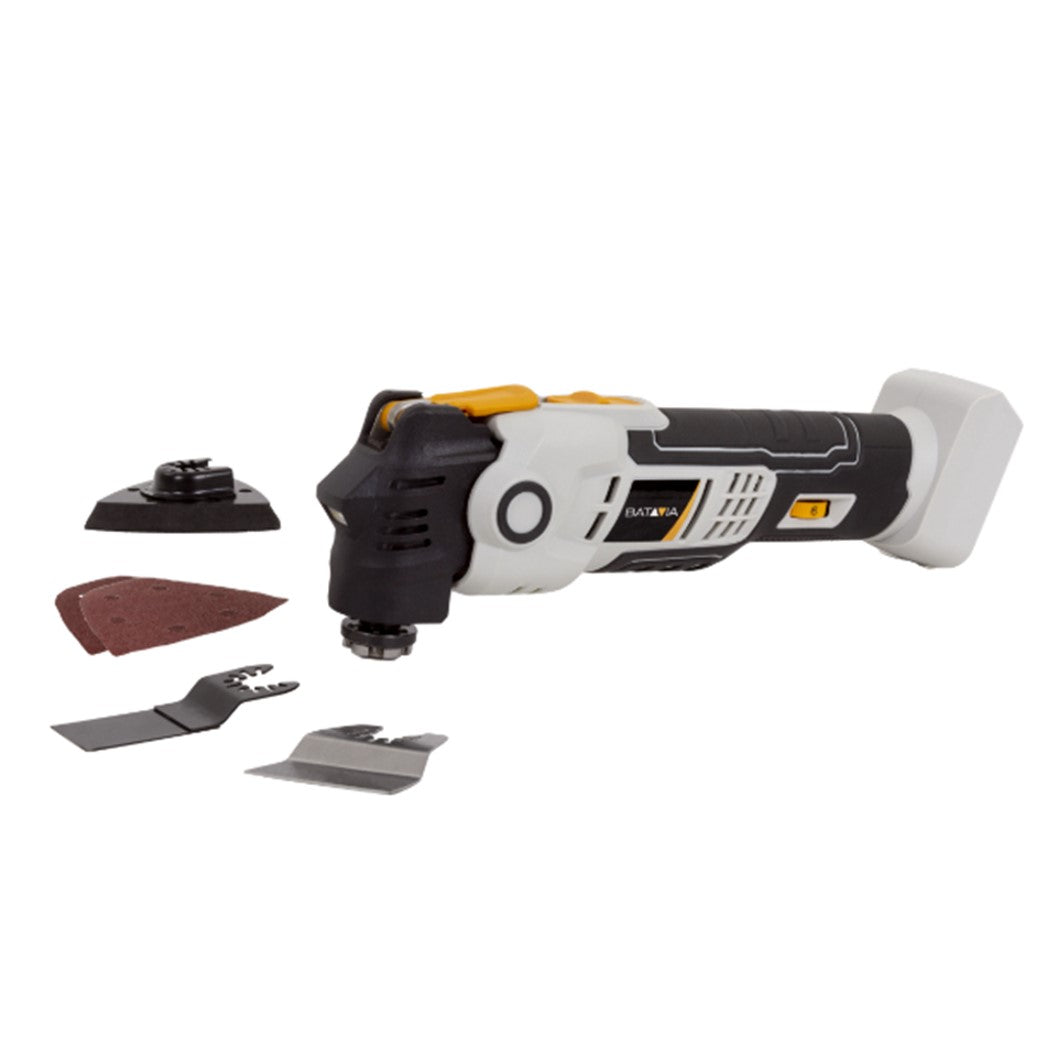
A multi-tool with a wood blade or a dedicated plasterboard blade makes neat rectangular cut-outs, even in a board that's already fixed to the wall. It's useful for a socket in an awkward spot or for trimming a board after fitting. A multi-tool running on the Maxxpack 18V battery also works where there's no socket nearby.
Circular saw
A circular saw cuts straight and fast but produces a lot of fine dust. Connect it to a vacuum cleaner or dust extractor and use a guide rail. A lower speed gives more control and less dust flying around. Ideally keep a separate blade for plasterboard and sheet materials, because gypsum wears a wood blade quickly.
Jigsaw
A jigsaw can cut curves and openings. Use a fine blade and switch the pendulum action off for a neater edge. The blade does make the board vibrate, so support it well.
Why does my plasterboard break when I cut it?
- The board isn't properly supported and sags under its own weight.
- You're pushing too hard, so the saw crushes the gypsum core.
- The saw teeth are too coarse or blunt.
- The offcut drops at the end of the cut and tears the last few centimetres with it. Support the offcut.
Cutting plasterboard with as little dust as possible
- Score and snap instead of sawing wherever you can.
- Saw outdoors or in a room you can ventilate well and screen off.
- Use dust extraction on the circular saw or multi-tool.
- Clean up with a vacuum cleaner, not a broom.
Safety when cutting plasterboard
Plaster dust is fine and irritates the eyes and airways. When sawing or sanding with power tools, wear a dust mask (at least FFP2) and safety glasses. Remove the battery from the saw before changing the blade.
Frequently asked questions about cutting plasterboard
Can you cut plasterboard with a jigsaw?
Yes, with a fine blade and the pendulum action switched off. Support the board well, because the blade makes it vibrate. For straight cuts, scoring and snapping is quicker and cleaner.
Which side of the plasterboard do you score?
Score the face side, which is usually the side with the lighter paper and the tapered long edges. Snap the board backwards and then cut through the paper on the back.
How do I cut a hole for a socket in plasterboard?
Mark the position and cut the opening to suit the back box you're using. For a round box, use a hole saw in the specified diameter with the drill on low speed. For a rectangular dry lining box, use a multi-tool or jab saw.
Do I need to finish the edge of plasterboard after cutting?
Yes. Remove any loose paper and crumbs with a plasterboard rasp or sanding block. Where cut edges meet at a joint, chamfer them slightly so the jointing compound can fill the gap properly.
In short: cutting plasterboard
Make straight cuts with a utility knife: score, snap and cut the back. Use a jab saw or multi-tool for openings and a hole saw for round holes. Save the circular saw for lots of cuts or precise work, always with extraction, and wear a dust mask whenever you cut with power tools.