6 minute read -
Insulating with a Staple Gun and Multi-Tool: The Quickest Way to Work
When you insulate, a staple gun is mainly for fixing membranes and thin, flexible materials to timber battens and studs: a vapour control layer, a breathable membrane, or insulation rolls with a paper or foil flange. A multi-tool cuts the insulation to size and makes cut-outs around pipes, joists and back boxes.
Rigid insulation boards such as PIR are not stapled. You fix them with insulation screws, insulation fixings with a wide head, or adhesive. Used together, insulating with a staple gun and multi-tool lets you work quickly and keep the finish tight.
What will you learn in this article?
- What do you use a staple gun for when insulating?
- What do you use a multi-tool for when insulating?
- Can you fix PIR boards with a staple gun?
- Step by step: insulating with a staple gun and multi-tool
- Common mistakes when insulating yourself
- Frequently asked questions about insulating with a staple gun and multi-tool
- In short: insulating with a staple gun and multi-tool
What do you use a staple gun for when insulating?
A staple gun drives staples into timber, which makes it quick to fix lightweight materials. For insulation work that mostly means:
- Vapour control layer on the inside (the warm side), stapled to the timber framework
- Breathable membrane on the outside, for example on a wall or roof
- Insulation rolls or batts with a paper or foil flange between timber joists or studs
- Reflective multifoil insulation on timber surfaces
- Insulation fleece or dust sheeting in a crawl space or at the eaves
A staple gun only works on timber or other materials that hold a staple. On brick, concrete or metal you need a different fixing.
Which staples should you use?
Choose staples that fit your staple gun and are long enough to pass through the membrane or flange and grip well in the timber. Staples of 8 to 14 mm are common for membranes. Check the specifications of your staple gun to see which staple lengths it takes. In damp areas, use galvanised or stainless steel staples.
What do you use a multi-tool for when insulating?
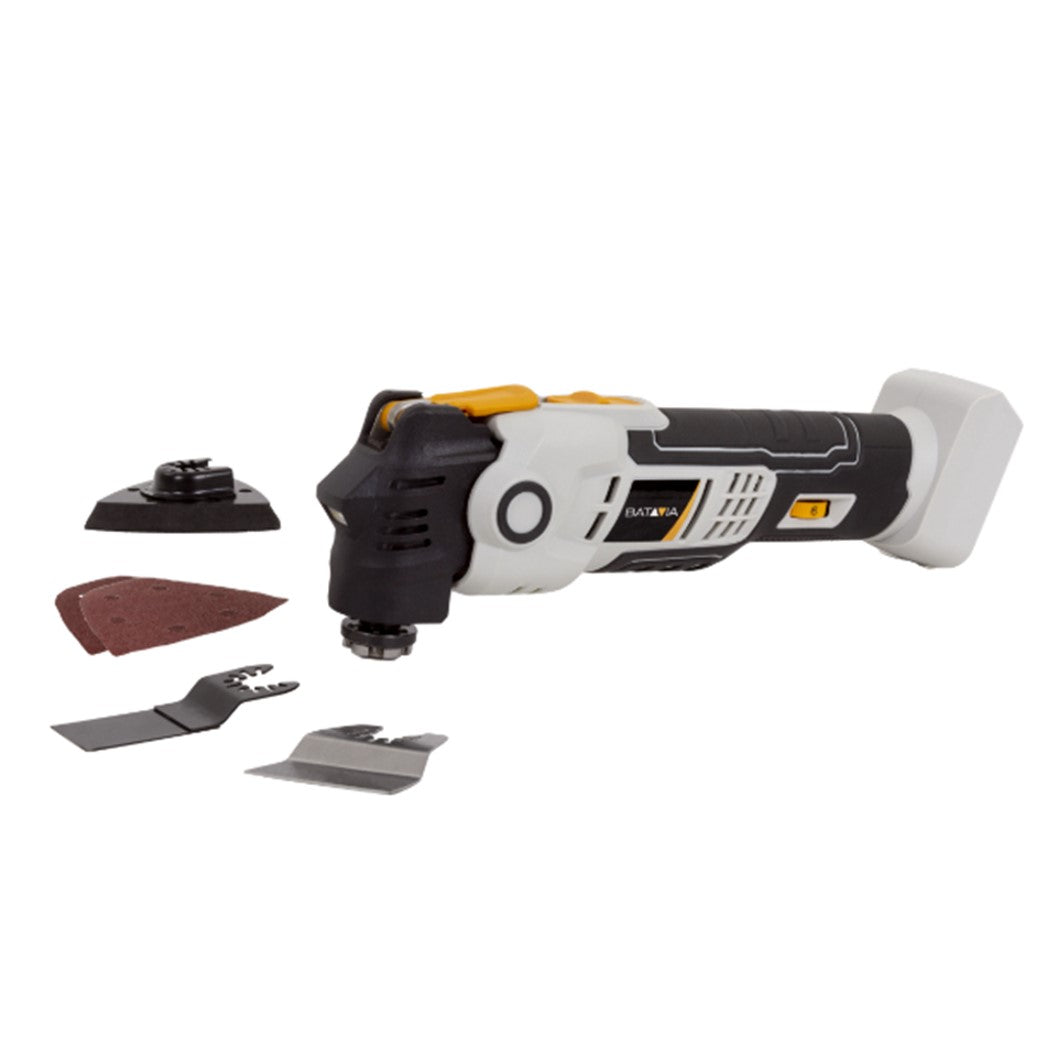
A multi-tool moves the blade back and forth in a fast oscillating motion, so you can cut accurately and get into tight corners. For insulation work you use it for:
- Cutting insulation to size: with a serrated knife blade or a long knife blade, you can cut mineral wool, glass wool and soft boards cleanly.
- Cut-outs around pipes, cables, back boxes and joist ends.
- Trimming battens: shortening a timber batten or block where a normal saw will not reach.
- Removing old insulation or sealant with a scraper blade.
If your cordless tools share one battery platform, such as a multi-tool from the Maxxpack 18V range, you can use the same batteries in the loft or crawl space, where there is often no socket nearby.
Can you fix PIR boards with a staple gun?
No. PIR, XPS and EPS are rigid boards. You wedge them between battens, screw them in place with insulation screws or fixings with a wide head, or bond them with a suitable adhesive or PU foam. A staple will not hold a board like that. You can, however, staple the membrane that goes over the top to the battens.
Step by step: insulating with a staple gun and multi-tool
Prepare and work safely
Clear the area and check the surface for damp, leaks and rot, and fix any problems first. Find out where electrical cables run so you do not put a staple through one. When handling mineral wool, wear gloves, safety glasses, long sleeves and a dust mask (FFP2 at least).
Measure the gaps
Measure the space between the joists or battens. Cut insulation rolls or boards a few millimetres to a centimetre wider so they fit snugly. Mineral wool should press firmly against the timber with no gaps.
Cut the insulation to size with the multi-tool
Lay the insulation on a flat surface, place a straight batten along the line and cut in one continuous movement with the serrated knife blade or knife blade on the multi-tool. For cut-outs around pipes, measure their position, make the cut-out slightly generous and press the insulation snugly around them.
Fit the insulation
Wedge the insulation between the battens. For rolls with a flange, staple the flange to the side or front of the battens every 10 to 15 cm. Do not leave any voids, and do not squash the insulation: compressed wool insulates less well.
Fit the vapour control layer
Put the vapour control layer on the warm side, which is the inside of the house. Staple it to the battens. Overlap the strips by at least 10 cm and seal the joints with suitable tape. Tape it carefully around any pipes or cables that pass through, and where it meets the walls and floor.
Check and finish
Check that the membrane is intact everywhere. Seal any tear, or any hole from a misplaced staple, with tape. You can then finish the wall or ceiling, for example with plasterboard on battens.
Common mistakes when insulating yourself
- Vapour control layer on the wrong side: on the cold side it traps moisture inside the structure.
- Gaps between insulation and joists: heat escapes there and condensation can form.
- Not taping the membrane joints: a membrane without tape is not airtight.
- Squashing insulation to make it fit.
- Stapling through cables because nobody checked where they run.
- Trying to staple rigid boards instead of screwing or bonding them.
Frequently asked questions about insulating with a staple gun and multi-tool
Which side does the vapour control layer go on?
On the warm side, which is the inside of the house, between the insulation and the finish. This stops warm, moist indoor air from condensing in the insulation. On the outside you use a breathable membrane instead.
Can you cut glass wool and rock wool with a multi-tool?
Yes. With a serrated knife blade or long knife blade on the multi-tool, you can cut mineral wool quickly and straight. A wide insulation knife also works, but the multi-tool is handier for cut-outs and tight corners.
How many staples do you need for an insulation membrane?
Fix the membrane every 10 to 15 cm on each batten. Where two strips overlap, staple through both layers and then tape the joint.
Is a cordless staple gun better than a manual one?
A cordless staple gun takes less effort, especially overhead or over large areas. A manual staple gun is lighter and cheaper, and it is fine for a small job.
In short: insulating with a staple gun and multi-tool
Use the staple gun for membranes and flanged insulation on timber battens, and screw or bond rigid boards. The multi-tool cuts insulation neatly to size and makes cut-outs around pipes and joists. Work without gaps, put the vapour control layer on the warm side and tape every joint so it is airtight.